March 538 – May 540
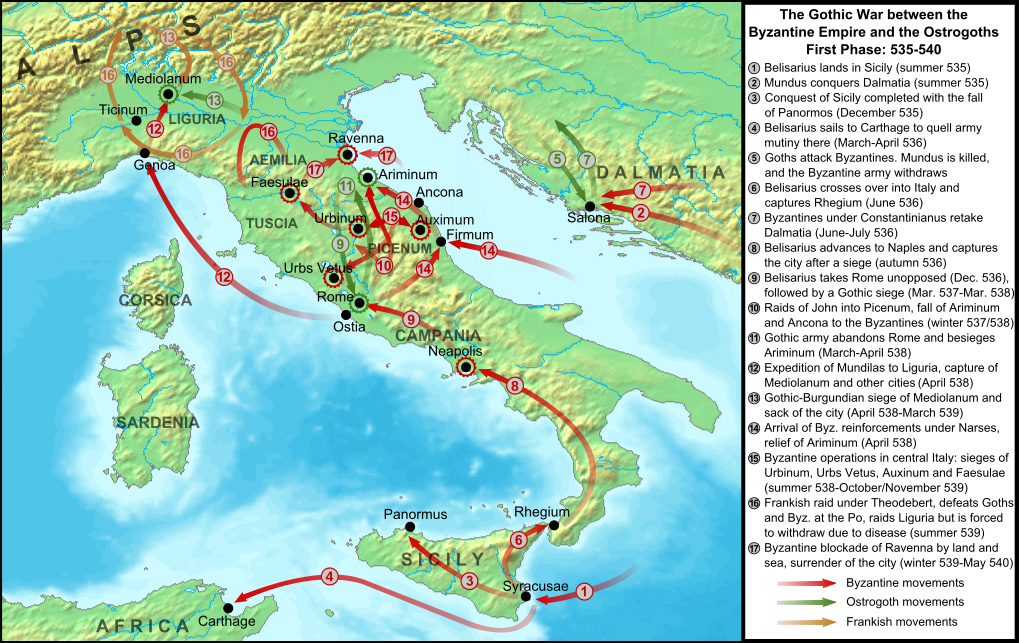
Rome belonged to Belisarius. The Goth king Vitiges had packed up his besieging force and abandoned their attempt to starve the Romans out of Rome. An expeditionary force led by one of Belisarius’ lieutenants had captured Rimini, and the loss of an important city so close to Ravenna spooked Vitiges into burning his camp and retreating back over the mountains. Along the way he strengthened garrisons, leaving five hundred to two thousand men in towns and fortresses all along the Salerian way.
If Belisarius celebrated his successful defense of the City, Procopius doesn’t mention it. The war wasn’t over yet. He set about with workmanlike resolve to play his new hand as well as he had played his last. The capture of Rimini was strategically a good thing, but an irritation for Belisarius personally. He had specifically ordered John not to leave enemy strongpoints in his rear, and John had gone ahead and left half a dozen such points between himself and Belisarius’ main force. Belisarius dispatched a force of a thousand men to ride along the Flaminian way – parallel to but out of sight of Vitiges’ force, to reach Rimini and carry instructions along with reinforcements. Simultaneously a force of foot soldiers were sent from Ancona, which was just down the coast from Rimini. Both forces reached their destinations well in advance of the arrival of the Goths.
The instructions John received were to withdraw his own – mainly cavalry – force from the city and return to the main army in Rome. The infantry force would take their place, with a lower-ranking officer in command. The hope was that Vitiges might ignore a less impressive (but still strong) force that did not so immediately threaten Ravenna, and not attempt to retake Rimini. Failing that, infantrymen would place less strain on the city’s supplies, as they did not have the same need for livestock fodder that cavalry did.
John refused the order. Point-blank. He had taken Rimini, he would hold Rimini, and neither the Goths nor the great Belisarius were going to pry it away from him. Once again, Belisarius’ management problems seem to have been coming into play. There wasn’t much time for remonstrations though, as Vitiges and his still much larger force approached. As the senior officer on-site, John ordered the newly-arrived reinforcements to defend a nearby town, and hunkered down in Rimini with his own men, preparing for the Goths’ inevitable assault. Procopius names the nearby town as Damianus, by the way, which I think is modern San Marino, the fifth smallest country in the world.
Actually, if you’d forgive a brief digression while I address nomenclature. If you’ve been with me for a while, you’ll know that I tend to use the modern name for towns and settlements whenever I can, though obviously the primary sources use different names. I’m actually a little bit old-fashioned in this approach, it seems, but I do it to make the story easier to follow if you decide you’d like to match things to your Google maps or whatever. That system breaks down quickly in the Eastern half of the empire and in Africa. For example, I’m not sure I’ve mentioned the modern town of Annaba, Algeria, but I have mentioned Hippo Regius a bunch of times. That’s partly down to the Eurocentrism of most of our educations – we are just more familiar with the map of Europe at baseline than we are with the maps of Turkey or North Africa. But there is also the fact that many of these are actually different settlements, the Roman town having been destroyed at some point in its history and re-founded on the same or similar spot by a different ethnic or linguistic group. The great Roman capital of Sirmium is a great example. It was conquered and completely destroyed by the Avars in 582 (spoilers). Today its ruins lie near Sremska Mitrovica, west of Belgrade. If I were to constantly refer to Sremska Mitrovica in the narrative it would be meaningless to most of you, and would also be inaccurate, since there’s no continuity from ancient Sirmium to the modern town. (Serbia, the country, does not owe its name to the superficially similar city name, by the way. The origins of the term Serbs for the slavic tribe is mysterious, but was attached they arrived in the region.) Since we’ve now entered the mire of nesting digressions, I think it’s time to move on.
Where the heck was I?
Right, outside Rimini. It would be so much easier to take sides in the ensuing battle of wills if John were incompetent or foolish, but alas, his defense of Rimini was active, courageous, and well-executed. The Goths attempted the siege tower trick again, this time putting men inside the tower to move it, rather than ox teams. John and his men snuck out in the night and dug a trench to prevent it from reaching the walls, and once it became stuck in the pit, launched a sally out from the gates to set it on fire. At that point Vitiges gave up direct action and settled on starving Rimini out. Unlike Rome, Rimini was small enough to effectively surround, and had not been prepared for a prolonged siege. Their supplies were limited and in spite of his skills and bravery, John couldn’t hold out forever.
Meanwhile, back at the ranch (where does that come from?) Belisarius was being pulled in several directions. A faction within his staff was advocating a relief force to go and relieve Rimini, which the general resisted. John had gotten himself into that mess all by himself by ignoring his orders. That the fall of Rimini had been at least one factor in the Goths’ abandoning the siege of Rome was conveniently forgotten.
Belisarius was also receiving delegations from cities all over Italy, seeking to throw off their Gothic rulers and asking for imperial garrisons to take their place. Most notable was the request from Milan, the old capital of the Empire. Feeling that here was a request that couldn’t be ignored, Belisarius dispatched a thousand men by ship. Commanded by one Mundilas, they landed at Genoa and from there crossed over the mountains into the fertile Po Valley. They were met by a Gothic army outside Pavia and defeated them, but were unable to take the city itself. Instead they passed it by on the way to Milan where they turfed out the Gothic leadership with the cooperation of the locals. Quickly the other settlements of the Piedmont, especially Novara, Bergamo, and Como, requested their own garrisons, and Mundilas didn’t feel that he was in a position to refuse. Before long, he was left with only about three hundred men to defend Milan, which, as you might have guessed, was not ideal, and the Milanese, like the Romans before them, found themselves unhappily pressed into service to supplement the imperial troops. The Roman position in the north was tenuous, and would only get worse.
Belisarius was finally forced to move in support of John by news that a reinforcing army of five thousand men had arrived in Italy, on the Adriatic side in Picenum, a region which is now mostly the Italian Region of Marche. Lovely; reinforcements are always welcome, surely. But this particular worm had a hook in it, in the form of the army’s commanding officer, Narses.
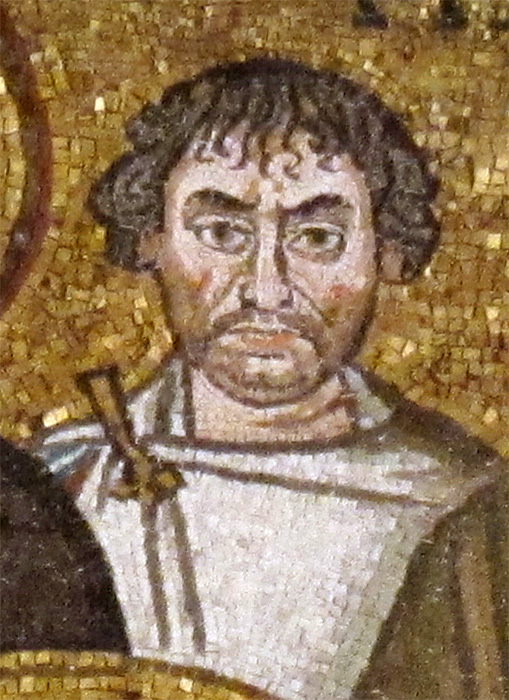
We’ve met Narses before. Cast your mind back to the Nika riots, and the people surrounding Justinian as the crisis mounted. There was Theodora the empress, Belisarius and Mundus (RIP) the generals, and Narses the Eunuch. Narses had been the one who slipped out of the palace to grease the palms of the blues and remove them from the board before the final massacre. Going further back, it had been Narses who had delivered bribes to the right people to ensure that Justin ended up on the throne, and thereafter Justinian, when Anthemius had died without an obvious heir. Now pushing sixty, Narses was still an operator, and still favored and trusted by Justinian. If he didn’t already know about the discontent within Belisarius’ officer corps, it didn’t take him long to catch the scent of it, and it would have been counter to his nature not to take advantage. Narses advocated quick and direct intervention to relieve Rimini. Belisarius resisted until a letter from John made it through, detailing exactly how close the city was to capitulation. In the face of that information, Belisarius was forced to concede, and move directly in support of John. He divided his forces into three columns; one to swing wide and approach Rimini from the northwest, one to march directly from the south, and one to approach by sea. It was a brilliant bit of positioning which threatened to completely surround Vitiges’ army. Vitiges received news of these movements and the arrival of the imperial reinforcements, and quickly broke off the siege before he could be trapped. He withdrew to Ravenna, his prestige damaged by two humiliating retreats in a row.
When the Romans arrived before the walls of Rimini, John rode out and enthusiastically expressed his gratitude … to Narses.
He wasn’t the only general who changed his allegiance to Narses. Though Belisarius was still in official control of the war effort, an opposing faction began to coalesce around the eunuch. Strategy meetings became contentious and the war was far from over. The main Gothic force still remained in Ravenna, and Milan and the other cities of the northwest were scantily defended and in grave danger. Probably worst of all, to Belisarius’ mind, their speedy rescue of Rimini had left several enemy strongholds in their rear, notably Ancona, which had just recently fallen thanks to the incompetence of its commander, as well as Osimo and Urbino. Belisarius favored sending reinforcements to Milan, and turning and dealing with these gothic strong points. Narses advocated a more diffuse approach, namely attacking Aemilia, along the south side of the Po, to isolate and put pressure on Ravenna.
For the moment, Belisarius was still able to enforce his will, and all marched south to Urbino, but the divisions between the commanders were clear. The two factions camped separately, and before long Narses declared that Urbino could not be taken, took his men and withdrew back to Rimini. From there he put his own plan into action and dispatched troops to spread out across Aemilia and secure the towns there.
To justify this obvious insubordination, Narses was using a phrase found in the orders that had dispatched him to Italy. Narses had officially been sent as the purser of the imperial forces, not their commander. Justinian had written, “It is our wish that Belisarius alone shall lead the whole army as seems good to him, and it behooves you all to obey him in the interest of the state.”
“In the interest of the state.”
Narses spun Belisarius’ initial reluctance to rescue John in Rimini as a personal vendetta. He argued that Belisarius was allowing personal feelings to dictate strategy and tactics, rather than doing what was good for the Empire. It’s a stretch, really, since the wording to me suggests an exhortation to obedience, nothing more. Others with better qualifications that I have pointed out that obedience to a commander’s will should have been assumed without such exhortations, and suggest that Justinian placed the phrase there for exactly the use Narses put it to. You pays your money and takes your choice. But Belisarius’ struggles to maintain the discipline of his officers, whatever their source, had prepared the ground for these seeds, and the crops of dissension were quick to grow. Belisarius was a good general, but not a very wise politician, and was utterly outmatched by Narses, with his thirty-odd years of experience in politics that were literally Byzantine.
John was successful in his campaigns and most of Aemilia was quickly in imperial hands. But Belisarius had some good luck too, as the spring that supplied Urbino suddenly ran dry, and the garrison was forced to surrender. Belisarius turned his attention to Orvieto, another city on his list. Meanwhile, Vitiges was not idle, he had sent a force commanded by his nephew to smash the tiny garrisons of Milan and its satellite cities.
But, Herbert, I hear you say, because you have excellent memories, wasn’t the emperor in contact with the King of the Franks, who had promised to help in the reconquest? Why haven’t they come into play? And I say yes indeed, listener with an extraordinary memory, thank you for making this awkward segue possible.
Yes, Justinian had sent letters and gifts to Theudebert, the king of the Franks of Austrasia, and received promises of material support in return. (Don’t worry about what Austrasia means, we’ll get to it in a later episode.) Since hostilities had begun, Jusitinan had received several letters from Theudebert filled with apologies and explanations for the notable absence of any Frankish aid other than threatening gestures along the Alpine borders of Italy.
Theudebert, in the proud tradition laid down by his grandfather Clovis, was another operator. War in the service of the empire may come with some rewards, but they would be rewards determined by the imperial commanders, there wasn’t much more juice to be squeezed from that fruit. But Theudebert still enjoyed the favor of the emperor, and it would be a shame to throw that away, especially when there were other options. Theudebert’s realm extended over the Rhine into old Allemanni territory, and south into Burgundian territory. So Theudebert sent a large army, 10,000 strong according to J.B. Bury, to join the Gothic army set to retake Milan and the Piedmont, or at least grab as many shiny goodies as they could get their hands on. If Justinian protested, Theudebert could hold up his head and point out that the army contained no Franks, but were all Burgundians, and he had no control over them … none whatsoever. Nope. Nope. Nope. Couldn’t have been me, I wasn’t even there at the time. The combined Gothic and Burgundian forces descended into the Piedmont and helped themselves to anything that wasn’t nailed down, before surrounding Milan, Mundilas, and his 300 hapless defenders.
The Imperial response quickly descended into farce. Belisarius sent a large force to relieve Milan, under the command of two men named Martin and Uliaris. Given the number of men available to Belisarius at the time, this “large” force could not have numbered more than around 3-4000 men. When they drew closer to Milan and understood the number of the enemy, this relief army paused, camped on the southern, safe side of the Po River, and dithered. Gold medal levels of dithering. Dithering to beat the band. After enough dithering had taken place that the word treason began to become a more appropriate word, the commanders sent word to Belisarius that they were terribly outnumbered and unable to cope, and requested that John break off his operations in Aemilia to come and reinforce them. Belisarisu agreed, but neither John nor his co-commander Justin would so much as shake a rein without orders from Narses, and so Milan suffered as letters made their way back and forth across the plains of the Po.
Narses did indeed give John permission to go and join Martin and Uliaris, but a further delay arose as John struggled to gather enough boats to cross the river, before falling ill and further delaying his march westward. Meanwhile, Mundilas in Milan received messages from the Goths, who promised that all of his men would be spared if he surrendered the city. Mundilas, who seems to have been a decent man, sought the same consideration for the citizens of Milan, but the Goths refused to make that promise. The citizens of Milan were traitors, as were the citizens of every city that had opened their gates to the emperor’s armies, and traitors had to be punished. Mundilas refused to surrender under such terms, but his soldiers were less high-minded, and at last forced their commander to agree to the Goths’ terms and save their own skins.
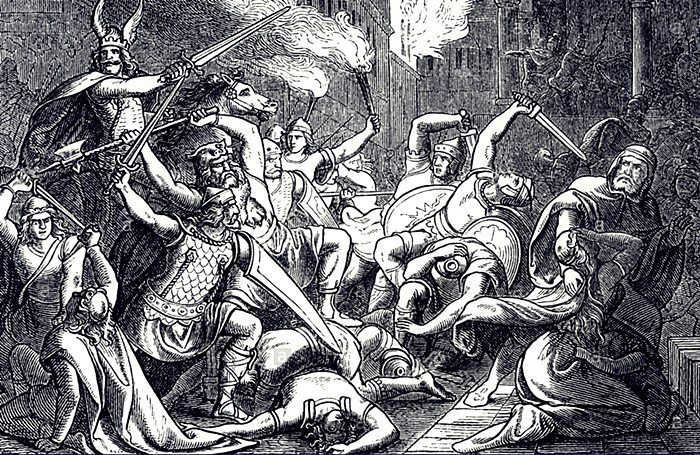
At the end of March, 539, Mundilas and his men marched out of Milan into well-treated captivity. Behind them, the wrath of the Ostrogoths fell on the citizens of Milan. I have found it difficult to find much modern work on the ensuing massacre. Procopius tells us that every male citizen was killed, every woman enslaved, and places the death toll at 300,000, which cannot possibly be correct, though the number itself isn’t really important in the face of the certain fact of the city’s destruction. The chronicler/bishop Marius of Aventicum wrote with typical class concern: “Milan was breached by the Goths and Burgundians, and there the senators with the rest of the people were slain even in the most sacred places, so that the very altars were stained with their blood.”
In the aftermath, the rest of Liguria and the Piedmont fell back under Ostrogothic control. Martin and Uliaris returned to Belisarius, who refused to see them. Uliaris disappears from history, but Martin went on to later commands in the east, with mixed results. News of the disaster was carried to Justinian by refugee survivors of the disaster. A frank letter of explanation from Belisarius’ arrived at the same time, and convinced Justinian that divided command in Italy was a mistake. He recalled Narses and recapitulated Belisarius’ position of supreme commander. No further punishment was levied on any military figure for the failures that had led to the destruction of Italy’s second largest city.
The massacre is a blot on the historical reputation of the Ostrogoths, J.B. Bury, writing in the 1920s and seeing events in strictly racial terms, says “it gives us a true measure of the instincts of the Ostrogoths” and proclaims it an act more savage than any of those of Atilla. I think I’m on record that I think comparing one hideous slaughter to another is an exercise in futility at best and whataboutism at worst. The destruction of Milan is symptomatic of the increasing intensity of the Empire’s war in Italy. Belisarius was reaching into the heartlands of the Ostrogothic kingdom, so it is not surprising that the fighting became harder and more brutal. As always the real victims of this intensification were the ordinary people and the economy of the lands that the war touched. Both the destruction of Milan and John’s ongoing campaign in Aemilia were devastating and interrupted harvests, which led to shortages and inflation.
Gradually the shortages became famine, and as the year wore on, the situation worsened. Liguria, Etruria, Aemilia, and Picenum all suffered famine, and Procopius reports 50,000 deaths in Picenum alone. The imperial armies were well supplied by sea, but all around them desperation spread. Procopius describes the suffering with his novelist’s eye, and his enthusiasm for both the war and its commander begins to noticeably dim.
“Now as the time went on and brought again the summer season, the grain was … ripening uncared for in the cornlands, but in no such quantities as formerly – indeed it was much less … The natural result of this was that most of the people fell victim to all manner of diseases, and it was only a few who threw these off and recovered … I shall tell of the appearance which they came to have and in what manner they died, for I was an eye-witness. All of them first became lean and pale, for their flesh, being ill supplied with nourishment … “laid hold upon itself” and the bile, having now the mastery of their bodies … lent them almost its own appearance… All moisture left them and the skin became so dry that it resembled leather more than anything else, giving the appearance of having been fastened onto their bones. And as they changed from a livid to a black color, they came to resemble torches thoroughly burned. Their faces always wore an expression of amazement, while they always had a dreadful kind of insane stare…most of the people were so overcome by their hunger that if they happened upon a bit of grass anywhere, they would rush to it with great eagerness, and kneeling down, would try to pull it from the ground. Then finding themselves unable to do so because all strength had left them, they would fall upon the grass and die. And no one ever laid them in the earth for there was no one to concern himself with burying them, and yet they remained untouched by any of the birds… for they offered nothing which the birds craved… all the flesh having been consumed by starvation.”
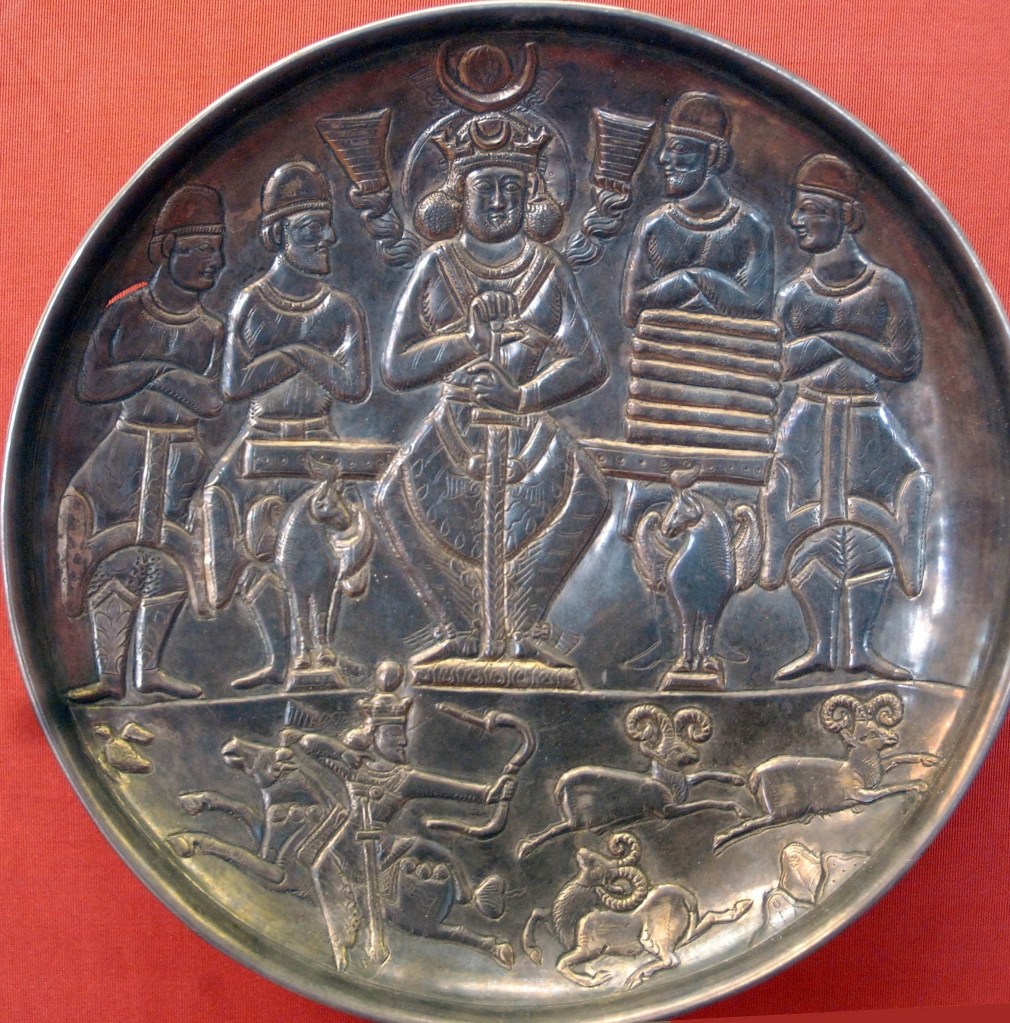
The Franks weren’t the only ones that Vitiges had contacted for help in his time of trouble. While still in Ravenna, dreading the seemingly inevitable approach of Belisarius, he sent messages out again to the Lombards, who demurred, and most boldly of all, to Khusrow, the King of Persia. Now, there was no way to send a message from Ravenna to Ctesiphon without crossing imperial territory, so Vitiges recruited two Italian priests, who could travel without suspicion, to carry his message. Given that travel was dangerous in itself, not to mention the punishment they could expect if they were caught, Vitiges must have been extremely generous in his recruitment package. These men left while the status of Milan was still in doubt, and did manage to arrive safely at the court of the Shahanshah.
Khusrow had signed a treaty of eternal peace with Justinian in 532. Since then, he had been irritated by the shenanigans of Roman clients along his borders, most especially the Ghassanid Arabs. More importantly, though, he was reaching the end of a period of government reform, reform for which he had needed peace. Now he was beginning to think that a war might be helpful in tamping down some of the discontent those reforms had engendered. When the priests arrived in his court with their letter from Vitiges, Khusrow was ready to listen and be convinced. He began to make preparations to break the truce.
News of contact between East and West could not stay secret for long, and reached Justinian, probably in June of 539. The Italian project was incomplete, but could still reasonably be declared a success. Rome was in the hands of its rightful rulers, after all, and the continued presence of the Ostrogoths was a minor annoyance compared to the threat posed by a belligerent Persia. Justinian began to make decisions with an eye to ending the war. He released the Gothic ambassadors he had been holding since the beginning of hostilities, and sent his own ambassadors to begin to work out a compromise settlement.
Like many soldiers before and since, Belisarius took a dim view of politicians negotiating away his victory. When Justinian’s ambassadors arrived, he refused to allow them to proceed to Ravenna. Insisting that first Vitiges release Peter and the other emissaries Theodahad had seized when all of this began. They had been held in captivity for four years now. As negotiations began, Belisarius continued the work of capturing cities, spending the summer and most of the autumn on Osimo and Fiesole. He had placed Martin and John in Tortona to protect against some southward push by the Goths, but they met an unexpected enemy instead.
Theudebert the Frank had decided that it wasn’t right that only his Burgundian subjects should have all the fun, and led his own army into Italy. All pretense was dropped, it was a Frankish army led by a Frankish king against the forces of the emperor. The reported size of this host is a ludicrous 100,000; I think it’s enough to say that it was a lot. The Goths believed they had come as allies, as before, but after they had helped the Franks cross the Po, the Franks turned on them, killing and enslaving the women and children and throwing the dead into the River. A Gothic army that was preparing to challenge Martin and John shouted a welcome to these men that they thought were allies, and received a shower of hand axes in return. We talked about the Francesca, the throwing ax of the Franks, before, and here they are deployed to devastating effect. The Goths broke and fled, right through the Imperial camp, much to the surprise of its occupants. Thinking that Belisarius must have arrived unexpectedly and defeated the goths, Martin and John rode to meet him, and met the Franks instead. Forced to fight, they were routed and sent wheeling back into Tuscany.
The Frankish success quickly went sour. There were provisions in the gothic and Roman camps, but they weren’t enough to last such a large mass for long. Now the Franks found themselves deep in a devastated landscape. There was no food to be had anywhere, whatever treasure there had been had been buried or removed by the earlier armies. Theudebert’s men complained loudly that they had been promised spoils, but this land was a desert, no blood could be squeezed from this stone. Disease broke out, and the Franks were obliged to retreat back over the mountains. They may have lost as much as a third of their forces to the adventure.
The Frankish interlude had very little effect on the strategic situation. The change came in the fall of 539. Belisarius sat outside Osimo, keeping the garrison tightly bottled up. The Goths managed to bribe an Imperial soldier named Burcentius to carry a letter to Ravenna for them, asking to help. He did so, and returned with encouraging words, but nothing else. The soldier carried a message again, informing the Gothic king that Osimo would surrender in five days if no help arrived. Still no help was forthcoming. The Romans learned of Burcentius’ treachery from a captive. Belisarius declined to pass judgment, instead turning him over to his comrades. They burned him alive before the walls. The end came when Fiesole fell, and the prisoners from that city were brought before the walls of Osimo. The Gothic garrison surrendered, on the conditions that half of the movable spoils would go to the Romans, and they would join Belisarius’ force. Vitiges’ star fell further in the eyes of his people, and “coward” began to be heard on Gothic lips.
At last free to move against Ravenna, Belisarius wasted no time, and the Goth’s military position deteriorated quickly. Reinforcements had arrived from Dalmatia, and Belisarius placed them on the north Bank of the Po, to prevent what few supplies there were from being sent from Liguria to the capital. Roman command of the sea prevented resupply from elsewhere. Like it had been for Orestes in 476, and for Odoacer in 489, the fortress city of Ravenna was turning into a prison, and would become a tomb if no action was taken. Vitiges received ambassadors from both the Romans and the Franks. The Franks offered to make common cause with the Goths; Vitiges probably didn’t need the reminders of recent treachery that the Roman ambassadors offered, and sent the Franks away. He wasn’t desperate enough to put his head into that wolf’s mouth again. His nephew Uraias, who had captured and destroyed Milan, attempted to come to the rescue with 4000 men, but the Romans managed to capture the wives and children of many of these soldiers, and they mutinied en masse and joined John and Martin’s force. Meanwhile, enemies began to appear inside the walls of Ravenna. Someone set the city’s granaries on fire; it was rumored that the inspiration had come from Matasuintha, Vitiges’ unwilling queen and daughter of Amalasuintha, who was in secret communication with Belisarius.
The Roman ambassadors carried a proposal that was extremely generous given the military situation. All territory north of the Po would be retained by Vitiges and the Goths, all that south of the River would be in Imperial control. Vitiges would remain king, and the Goths would pay an indemnity consisting of half the treasure in Ravenna. And that would be an end of it. Vitiges and his leading men jumped at the opportunity to end the war on such favorable terms, and could barely conceal their relief. In spite of some bright spots, the war had been a disaster for the Ostrogoths; to get out of the thing alive at all was a victory.
Belisarius, though, was disgusted by the offer. He had Vitiges by the throat, and now was being prevented from squeezing. He refused to sign the treaty when it was presented to him. Some of his generals, still not entirely on their commander’s side, grumbled that such was a defiance of the emperor’s will. Belisarius called them all together, and compelled them to make their support of the treaty clear in writing. They did, unanimously, but Belisarisus still refused to sign it. The delay worked on the mind of Vitiges and the other Gothic leaders, who began to suspect that the treaty was merely a tactic and a trap. Technically, Belisarius’ signature wasn’t necessary to make the treaty legally binding, but now the Goths required it as a condition of their agreement. Impatience was growing, directed as much at Vitiges as at Belisarius, since his incompetence and inaction had led to this humiliating position.
In this atmosphere of suspicion and growing despair, someone had an idea. The Amals were effectively extinct, and Vitiges seemed to have demonstrated that there were no others who could be credible kings of the Ostrogoths. Why not go back to the way things had once been? Why not make themselves the servants of an emperor? Not Justinian, who was far away, but a revived western emperor they could all respect? An emperor Belisarius? The Ostrogoths would proclaim him their emperor and serve him loyally. When word of this plan made its way to Vitiges he reluctantly agreed that he would step aside in favor of his opponent, who in spite of everything had always behaved with honor and whose military prowess was self-evident. He was probably too exhausted and depressed to do anything else.
The proposal was passed to Belisarius in secret. The Goths were sure that he would jump at the chance, and he did agree, enthusiastically. Here we have to be cautious of Procopius’ narrative. He goes out of his way to make it clear that Belisarius had no intention of following through with this plan, that he had seen a way to make his conquest complete, but would stop short of accepting the imperial diadem. According to our historian, he again convened a council of his commanders and made it absolutely clear that such was his intention. But could Procopius have been polishing his subject a bit? Is it possible that Belisarius did, at least for a while, consider the idea of being the new Western emperor? I imagine that it must have, alone in his tent at night, he would hardly have been human if it had not. But I also imagine that the implications would have been evident with less than a moment’s thought. Justinian would never accept or forgive such a betrayal, and rather than ending the war, a new one would start, especially since Belisarius couldn’t count on his own commanders going along with the idea. Belisarius agreed to all the terms that were offered, but demurred to accept the purple, saying that wished to wait until he met with Vitiges and the Gothic lords in person.
Agreements apparently in place, Belisarius made preparations to enter the city. He ordered grain ships to supply suffering Ravenna, and sent his least reliable commanders, among them John, on various errands around the country, on the not unreasonable pretext that it would be impossible to provide for the whole army in such a concentrated place. In May of 540, Belisarius entered Ravenna. Procopius does not describe the moment when he made the deception clear, alas. Vitiges and Matasuitha were taken into honorable captivity. The palace was thoroughly looted, but Ravenna itself was not subjected to sack. The Goths who were present were allowed to return to their homes. Most of the towns of the North had already surrendered and accepted Roman garrisons, under the false pretense of the agreement. The notable exceptions were Pavia and Verona. Satisfied that he had achieved his ultimate objective, having deposed and captured the kings of both the Vandals and the Ostrogoths, Belisarius sailed for Constantinople.
Behind him, he left behind an Italy that was once again part of the Roman empire, but also an Italy that had been devastated and impoverished. Urban infrastructure had been destroyed all over the peninsula, much of it would never be repaired. Agriculture would take decades to fully recover. In Italy, at least, there is an argument that if we are going to use the forbidden phrase “dark ages”, they really arrive here and now. Ironically, at a moment of supposed restoration.
Belisarius also left behind a job not really finished. Vitiges’ nephew Uraias, in Pavia, and another noble named Ildibad in Verona, remained unreconciled to the new reality. Kingship was offered to Uraias, but he declined on the basis that his uncle had leached all the legitimacy out of their bloodline. Ildibad allowed himself to be crowned instead, he was well known as a commander and had some royal connections, as he was a nephew of the king of the Spanish Visigoths. Though his kingdom consisted only of about 1,000 fighting men and a strip of territory connecting the two remaining cities, this was a seed from which a revived Gothic polity would grow.
Belisarius’ return to Constantinople this time was in stark contrast to his return from Africa. Justinian had heard about the imperial offer, and though Belisarius had done the right thing in refusing it, it still didn’t sit well. By circumventing the negotiated settlement with Vitiges, Belisarius had undermined the emperor’s express wishes, and that could not be celebrated. The general was received coolly by Justinian and Theodora, and no triumph was celebrated. It would be an overstatement to say he returned in disgrace, but his star did not shine as bright as it once had. He would be dispatched to the east the following spring, to begin operations against the Persians.
Vitiges died in Constantinople two years after his arrival. His wife, Matasuintha, the last descendant of Theodoric the Great, married a local patrician and cousin of Justinian named Germanus, who lived just long enough to give her a son, also named Germanus. She lived comfortably in Constantinople as a widow for the rest of her life, and died in 551.
 The Dark Ages Podcast