4000 BCE to c. 700 CE
The Western Pyrenees are home to the Basques, a mysterious community who speaks a unique language, and who have been there … for as long as anyone can tell. In this episode we’ll explore their history up through the seventh century, and their relationship to the people who have come and gone around them.
At times I feel like I have a habit of assuming too much prior knowledge on the part of all you wonderful listeners. For instance, I kind of assume that you have all listened to Mike Duncan’s History of Rome all the way through at least once, since this podcast is intended as a successor to it. But of course I’ve never actually said that, so I’m sorry if there have been things along the way that were unclear. If I refer to something you are unfamiliar with, I also assume that you are all the kind of smart, engaged, and curious people who will go and look it up, and that is an assumption I shall hold tight to my heart, with no designs for its alteration or abrogation, because it is what I want to believe.
Any-way.
The point of all of this nonsense is that when I refer to the Basques, the subject of today’s episode, I should not assume that you know who or what I am talking about – it’s who, by the way. So let me put that right right now. The Basques are an ethnic group of unknown origin, living in the western Pyrenees of northern Spain and southwest France. Simple enough. The word Basque may also refer to their language, which is entirely unrelated to its neighbors, and is not even Indo-European. For the record, the Basques’ name for their language is “Euskara”, which I will use henceforth. Both because it means I won’t have to signpost whether I’m talking about language or people all the time, and because it’s a nice, euphonious word. “Euskara”
Okay are we all clear who we’re talking about?
So, how about why we’re talking about them?
Well, the most immediate reason is because I was interested and I wanted to. More broadly though, it was because it gives an opportunity to look a little more closely at the kind of pressures and changes happening in the fifth and sixth century, since it’s all taking place in a much more circumscribed area than the grand narrative I’ve been following, lo these many episodes. It also is an opportunity to do some ethnography, which is something I haven’t gotten to do since the early episodes on the Franks.
I find myself in an interesting position in this episode. For the first time I’m writing to tell you about a group of people who still exist as an active ethnic community. Outside of the halls of rhetoric I don’t think anybody’s running around these days claiming to be an Ostrogoth or Visigoth, a Vandal or even a Frank and yet, there the Basques are, living in northern Spain and southern France, where they always have. That means that this episode has the potential to become a little bit contentious if I’m not careful, since the Basques’ relationships with those two countries have not always been harmonious, especially in the 20th century. My understanding is that relationships have been steadily improving lately, but without direct experience I can’t really know for sure where sensitivities may still remain. It will not keep me from punning in the episode title, though, it would take more than the possibility of social media outrage to do that. Spanish listeners, if you have any insights you can share, please do get in touch however is most convenient to you. You make up about ¾% of my audience, but I’m sure at least one of the six of you will be able to correct me about something.
So I think my guiding light is going to be to strictly work my own furrow, and tell the story of the Basques up until roughly the Arab invasion of Iberia at the beginning of the eighth century. That will take us a bit beyond where we’ve reached in the main narrative, but it shouldn’t disrupt anything there. Spoilers, the history of the Basques runs into the blackest of documentary holes right about there, so there will be no great and dramatic break for the end of this thing.
Geography
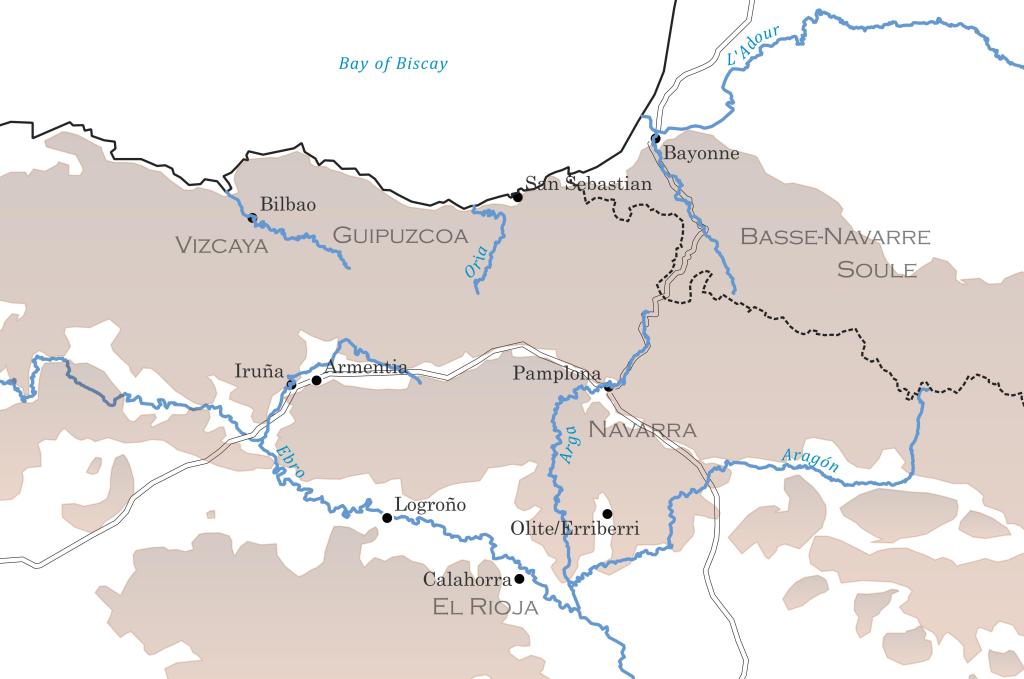
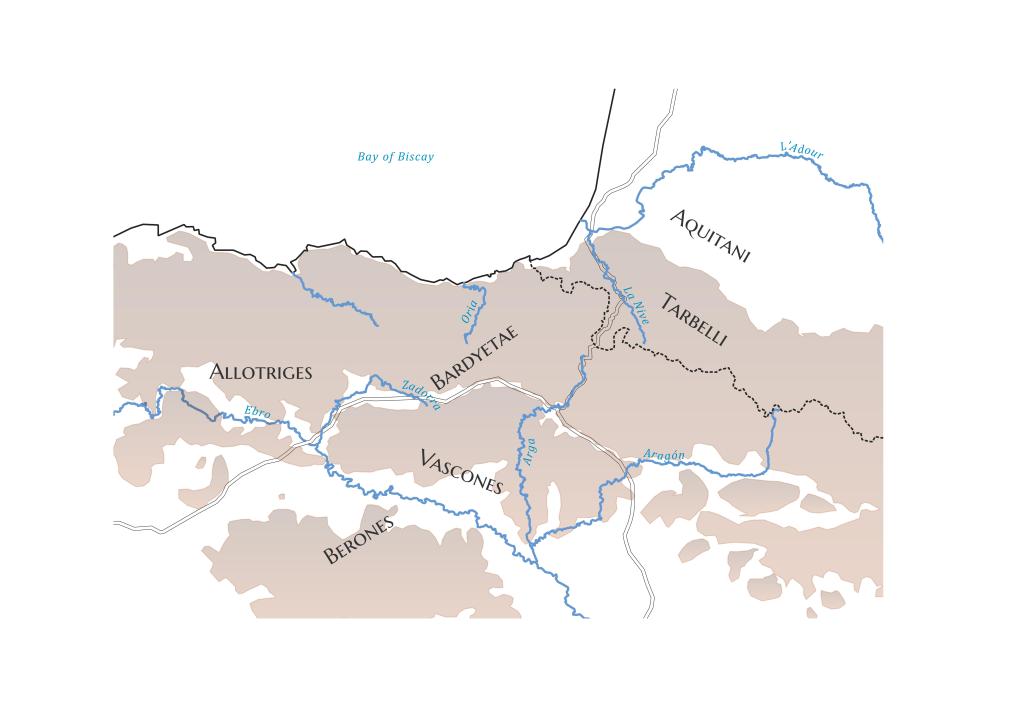
Let’s start by setting the scene. We are talking about the western end of the Pyrenees mountain range, right where the Atlantic coast of France veers from north-south and changes to the east-west coast of Spain. The mountains gradually drop off in height as you follow them westward, then continue as the Cantabrian range, following the Spanish coast. The mountains cast a rain shadow, so on the northern, seaward side, they are (or were) heavily forested and lush, while on the southern side, the upper Ebro Valley and central plateau are semi-arid and warmer. Today, the Basque country officially includes the Spanish provinces of Vizcaya, Guipúzcoa, Alava, and Navarra, as well as the western half of the Pyrenees-Atlantiques department of France, though the vagaries of history have meant that the territories occupied by Basques has expanded and shrunk beyond those modern borders. The terrain makes the region remote, but not impossible or completely isolated. The passes over the mountains have been well known and regularly used for thousands of years. In terms of cities, the larger, more famous ones today are Bilbao, San Sebastian, and Pamplona in Spain, and Bayonne in France. I’ll mention others along the way. There will be a map on the episode page at darkagespod.com, and I will put links in the show notes on this episode. I anticipate there will actually be several maps, you lucky things.
By the way, sorry to interrupt, it has come to my attention that the links I put in the episode descriptions, to things like, you know, maps, and sources, and images, do not work in Spotify. That’s irritating, since 80% of you listen on Spotify! I just became aware of this and will be working on finding a solution so that you can more easily access the website. Sorry, I just didn’t know.
The ongoing and probably unanswerable mystery of the Basques is whether they represent a population that has occupied the mountains in unbroken continuity all the way back to the Stone Age or are a later introduction. Have they always been there, and if not, when did they arrive?
The Stone Age
Evidence for the earliest human settlements, in the vast gulf of time between 40,000 and 10,000 years ago, is limited to only a handful of finds. It’s extremely likely that the last ice ages marked a complete break in the continuity of human settlement, and any attempt to connect the present population to these deeply ancient Cro-Magnon settlers can have no solid foundation. As the glaciers receded and the Neolithic period dawned, finds become a bit more common. I’m talking here about the period between about 4000 and 2000 BCE. These are most concentrated in Álava, where simple, undecorated pots are found, with a few further finds in neighboring Navarra.
Given the absence of clear answers, I can’t describe the Stone Age archaeology and say “these are definitely the ancestors of today’s basques”. All I can do is describe what the finds do tell us, and emphasize that there’s a huge asterisk hanging over the whole thing.
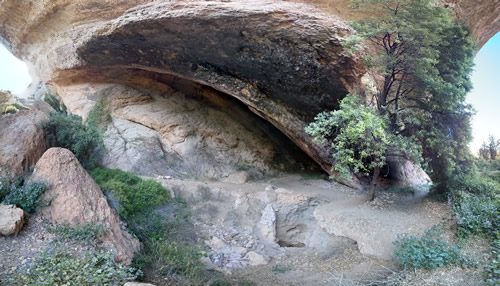
Stone Age finds appear in caves at higher elevations, and in open air clusters further down in the valleys. There’s no significant difference between these finds, suggesting the same culture used both. Given the climate, the most likely interpretation is that the earliest settlers were largely pastoralists who practiced transhumance. That is, they practiced animal husbandry, and used the lower settlements in the winter, then drove their flocks or herds to higher pastures in the summer, where they used naturally occurring caves as shelter. There’s no material difference between the artefacts found in the core mountain region and those found in neighboring areas.
One difference that does appear though is the presence of dolmens. A dolmen is a megalithic structure, with large stones standing on end with a roof stone on top, to form an enclosed space. Often interpreted as tombs, it’s also conceivable that the dolmens of the Basque Country were set up as shelters for herdsmen in their annual cycle. Artificial caves, if you will. Dolmens are only found in the central part of the region, mainly in Alava and Guipuzcoa, and can be added to the pile of prehistoric mysteries. Map and images, of course, on the website and instagram.

The so-called Neolithic Revolution swept across Europe in these millenia, as people gave up hunting and gathering or pastoralism in favor of planted agriculture. It appears to have been delayed on its way up into the valleys of the Pyrenees, though. Arable farming seems to have arrived much later there, along with bronze, between perhaps 2000 and 900 BCE. Whether that was due to climate or isolation, we can’t know. Planting never completely took over as the sole means of sustenance; for all of the time we’ll be talking about today, a combination of arable and transhumant pastoralism was the economic model of the mountains. The arrival of bronze working seems to have come as a result of cultural diffusion from outside, not the arrival of a new group of people, and that makes sense for a still largely pastoral society. We’ve talked before, a long time ago, about the necessary relationship between settled planters and nomadic herdsmen. The herders could not keep all their animals over winter, and usually had a surplus of dairy products and raw materials like wool and hides. These they could trade for needed goods with their more settled neighbors, things like pottery. When trade was impossible, in times of hardship, for example, then raiding might be required, but the pastoralist needed and benefited from the farmer, and vice versa. Through these trading relationships, knowledge of metal-working spread. It also explains the absence of a clear distinction in the material culture of the regions.
© José Luiz Bernardes Ribeiro
Iron Age Arrivals
The slow diffusion of bronze-age technology stands in stark contrast to the arrival of the iron age in the Basque Country. Iron age finds are found almost entirely in the Ebro Valley, and along the lower parts of its tributaries, far from the high country. None are found in the dolmen zone, which may be meaningful or may not. The iron age finds usually take the form of hill-forts and fortified settlements, suggesting a new element of violence. Some interpret this as the appearance and invasion of an outside force, coming to colonize and impose itself on the native inhabitants of the region. The settlements seem to have appeared in two waves, one between 900 and 600 BCE, the other between 500 and 200 BCE. In the later wave, a Celt-Iberian influence can be detected in the style of the artefacts found. None of this culture appears in the higher valleys, and so it’s argued that the Celts of Iberia were not the ancestors of today’s Basques. Given this prehistory, we can probably safely conclude that the mysterious Euskara language arrived in the western Pyrenees no later than around 600 BCE, if it arrived with the first wave of iron age invaders, and probably earlier. That’s my take on it anyway.
The Language
Linguistics is key to the argument about origins, but far from clear cut. Everyone agrees that Euskara is not an Indo-European language, and is the only such language surviving in Western Europe. What no one can agree on is what language family it does belong to, when its first speakers appeared, and where. There have been attempts to link Euskara to the Pictish language, but the effort crashed and burned so completely that you’ll rarely see it mentioned anymore. It is largely agreed now that the Picts spoke some variation of Brythonic, which is a Celtic and therefore an Indo-European, language. There are other non-indo-European languages in Europe, notably Hungarian, Finnish, and Estonian, but the origins of all of them are well established in the historical record. They are all much more recently introduced to their current homelands, and no solid connection between them and the language of the Basques holds up to close scrutiny. Euskara appears in this way to be unique among modern languages.
Nafarroako Gobernua | Gobierno de Navarra, CC BY-SA 3.0 https://creativecommons.org/licenses/by-sa/3.0, via Wikimedia Commons
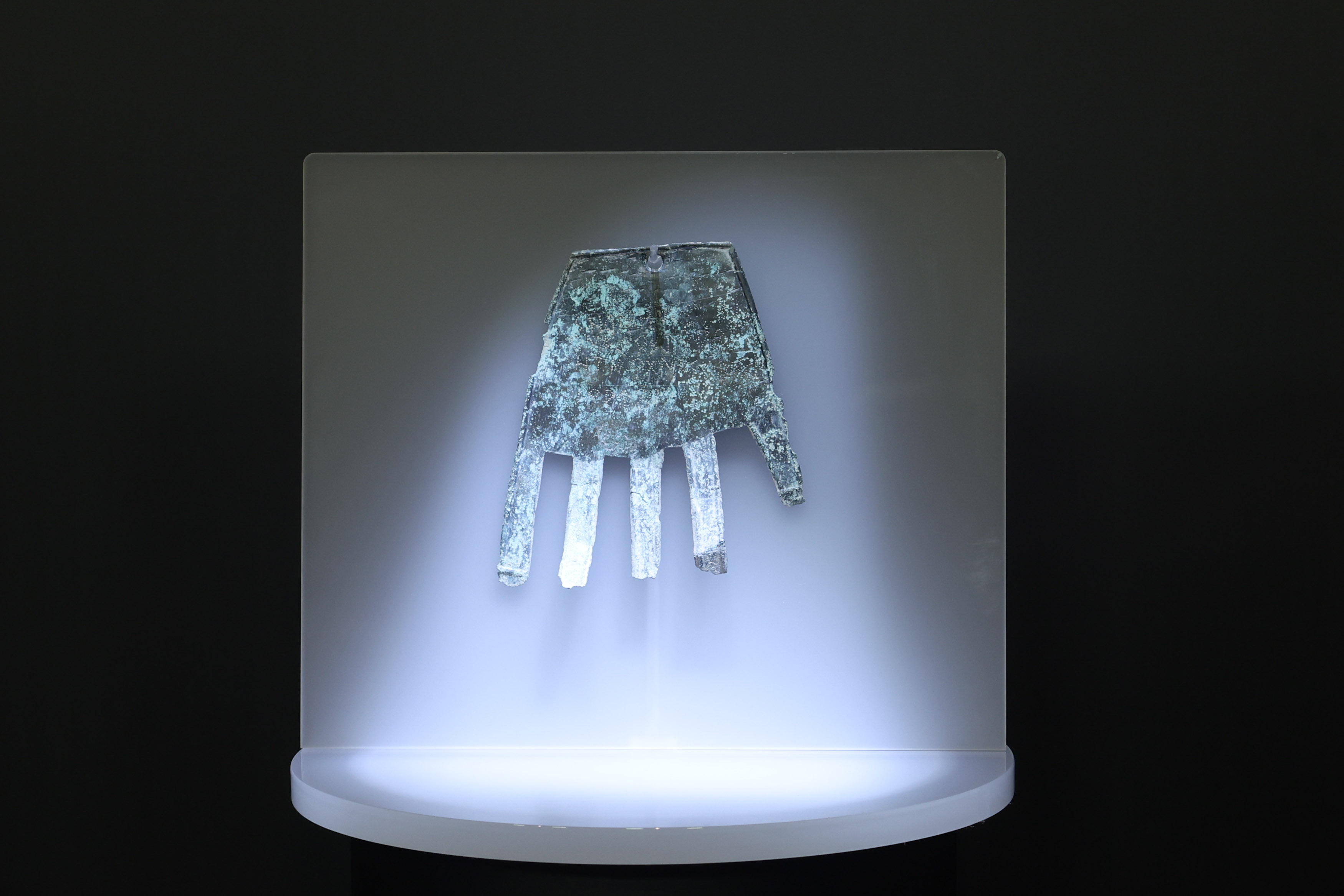
Euskara does seem to be related to the language of the Aquetainii, the tribe that occupied southwestern Gaul prior to the arrival of Julius Caesar. The Aquetani left inscriptions, which tell us that their language was unrelated to the Celtic languages around them, and similar to Euskara. Its classification, as you can probably guess, is just as murky as Euskara’s is. The earliest source for written Euskara is on an artifact called the Hand of Irulegi, which allows you to cast Turn Undead at level five and grants immunity to psychic damage. No, sorry. What the hand is is a flat piece of bronze cut into the shape of a human hand. It was found in 2021 in Navarra. The hand bears inscriptions across the back in four lines. Its meaning and purpose are not well understood, though it may have hung on the door of a house as a talisman. The writing is identifiably a form of Euskara, and written in the Northeastern Iberian script, a descendent of the Phoenician alphabet. It’s the only object of its type found anywhere in Iberia, though similar objects are sometimes found in the Levant. Like most things related to the origins of the Basques, the Hand of Irulegi raises more questions than it answers, but it is the latest thing, and I would be remiss if I had not mentioned it.
Genetics
Before we move out of pre-history entirely, I want to give a brief nod to genetics. Now I will be honest, I arrived at the genetics question at the end of my research and have not had time to properly dive in on it. So this is going to be the lightest, gentlest scratch of the surface. I am in unfamiliar territory here, so bear with me, and apologies in advance for any grievous errors. Corrections are welcome.
Studies of mitochondrial DNA, passed matrilineally, show that the Basques are largely consistent with the rest of western Europe. Two main haplotypes are present, the J group and the U group. In the Basque country, a variation of the U group, U8a, developed and is native to the area, though it is hard to say when it appeared.
A study of Y chromosome DNA, which is patrilineal, shows the haplogroup R1b as most common in the Basque country, with 91% bearing the marker, Wales 89%, and Ireland 81%. One suggestion is that the British isle were a refuge for proto-basque peoples during the last Ice Age, though why one would travel north to flee an Ice Age is not at all clear to me. That’s fascinating, but doesn’t shed much light on origins. In 2015 a study concluded that the Basques were a combination of Iberian farmers who had been intermixed with Neolithic pastoralists and hunters before becoming isolated. The isolation began at least 3000 years ago, so around 1000 BCE, just before the arrival of those Iron-Age fort builders I mentioned.
So that’s all clear as mud and I almost wish I hadn’t mentioned it. Let’s move to the slightly firmer ground of documentary evidence instead.
The Romans
Historical evidence for the Basque country arrives with the Romans, as you might expect. The earliest mention of the peoples of the area are of a cohort of slave-soldiers belonging to Gaius Marius in 87 BCE. The geographer Strabo mentioned three tribes occupying the western Pyrenees, the Allotriges, the Bardyetae or Varduli, and the Vascones. Vascones is the source of both words Basque and Gascon. Marius’ men were Vardulli. These three tribes are generally accepted as the forebears of the modern Basques, but again, it’s a conclusion drawn from still limited evidence, rather than a hard, clear association. Strabo mentions that these tribes’ societies were matriarchal, an assertion that is repeated in many later sources. While women in Basque society have enjoyed overall greater independence and influence compared to their neighboring cultures, no remnant of matriarchy or matrilineal inheritance practices survives in the modern, or pre-modern eras.
If you think back to episode 47, Roman Hispania, you may remember that it took some time for the conquest of Iberia to be complete, and the northern mountains were the most bitterly contested. That was true, but seems to have been mainly true of the Cantabri, further west than the Vascones and their allied tribes.
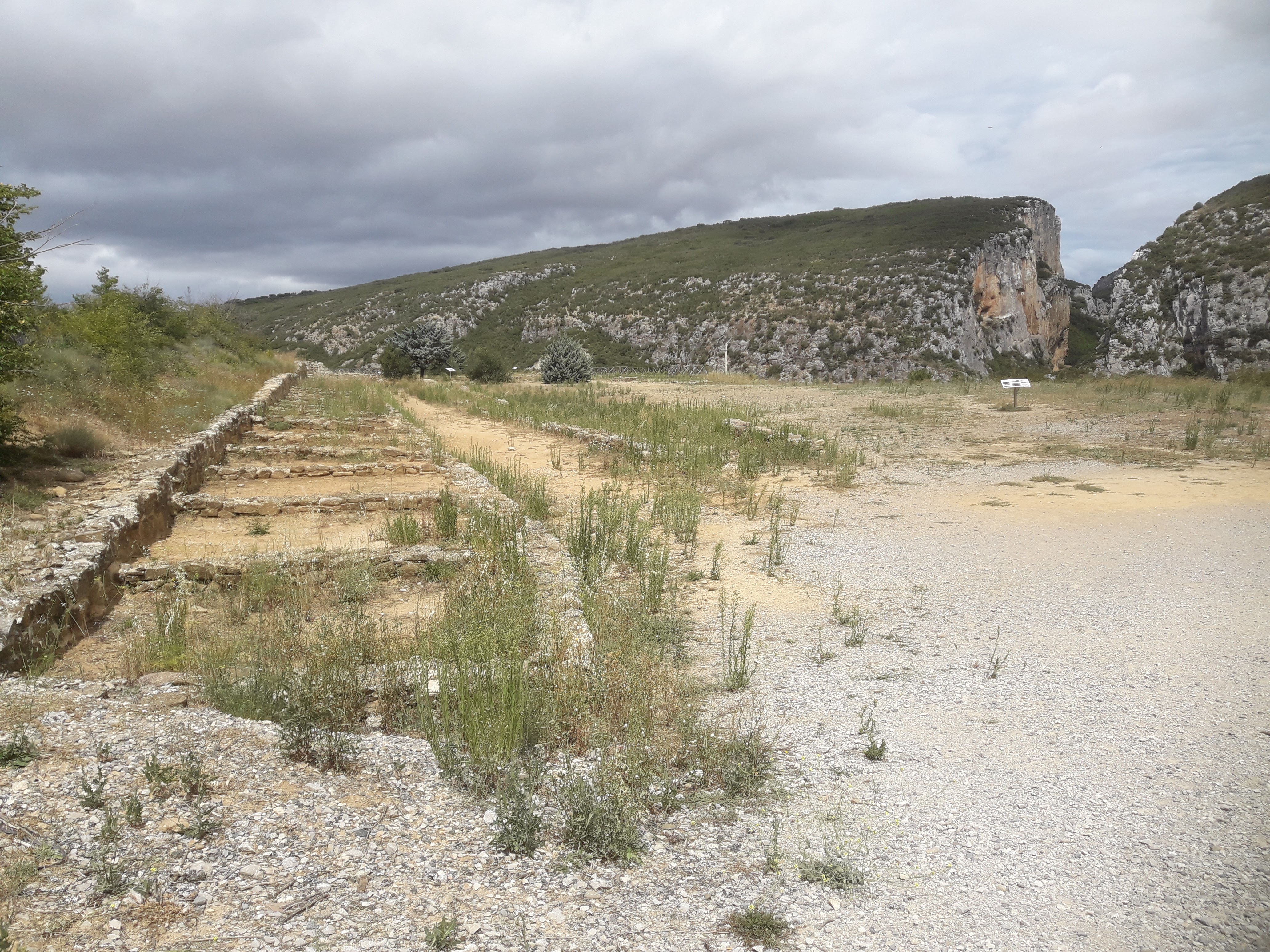
Roman remains in the Basque Country are relatively sparse; the climate wasn’t conducive to the cash crops that would have attracted large villa-based production. The mountains were of little interest to the elites of the empire, since there seemed to be little wealth to be extracted from them. But that is not to say that there was no Roman presence. There aren’t a lot of luxury goods or opulent architecture, but Roman or Roman style artifacts are found all over the region. Pottery, mosaics, decorative bronze work. The quality of the work never rises above what we might call provincial – it’s no match for the things found in the large urban centers like Tarragona or Seville, but it’s very much present. Given that first contact with the Romans would have been around 100 BCE and then been continuous for over five hundred years, it would be surprising if a degree of romanization did not take place.
Pere López Brosa, CC BY-SA 3.0 https://creativecommons.org/licenses/by-sa/3.0, via Wikimedia Commons
The Romans don’t seem to have considered the Basque Country a dangerous frontier, either. Military finds indicate that only one cohort was stationed there, probably at Iruña, near modern day Vitoria. A larger force was stationed further west, at the edge of Gallaecia, well removed from the lands of the Vascones. The Iruña cohort was likely no more than a thousand men, probably split up across multiple garrison posts. Most likely their main function was to protect commerce on the main road that led from Astorga to Bordeaux from bandits. It was certainly not a force large enough to keep a lid on a rebellious populace. The presence of such a large artery running through the region at all also speaks to its relative peacefulness.
The Vascones were integrated into the imperial system. The Prima Fida Vardullorum Civium Romanum had guarded Hadrian’s Wall, with the promise of Roman citizenship upon discharge. In Northumberland, also in Britannia, an inscription was found in a Roman fort commemorating a unit named Prima Fida Vardullorum Equitata, “First Faithful Vardullian Cavalry”. The inscription dates to the third century CE. Alas it’s impossible to know anything more of the unit’s history, and whether ethnically constituted units maintained their ethnic identity over time is a moot, but at some point a unit of Vardullians was recruited into the Roman army and stationed far from home, in the cold and wet of Northumberland. The last reference to the Prima Vardullorum cohort, from the same site, notes that they served alongside a unit of Sarmatian scouts. It’s a compelling, romantic image, these two groups from the furthest possible corners of the empire, doing their military duty in another far corner of it.
It all speaks of the Vardulli and Vascones as a people who were integrated into the Roman system, fulfilled their military commitments, and participated in at least the local and regional economy, if not the broader imperial one. At the same time they maintained their own language and as much of their culture as they could. A story that could be told of a hundred other languages and people all around the various corners of the Roman World.
Religion
By the fourth century, connection to Roman culture inevitably brought along Christianity. The Christianization of the Basques is just as contentious and historically shrouded as just about any other story I tell you all, and I’m sorry about that. The mystery has given rise to some amusing theories, though. From the sixteenth through the nineteenth centuries, fads for antiquarianism, romanticism, and nationalism were all influential within the Basque country as they were throughout Europe, and scholars attempted to fit the Basques into their own framework of the European story. One argument was advanced that Euskara had been the language spoken in the garden of Eden. Another used features of the language to show that the revelation of the Gospels had been accepted by the Basques before any other people.
Modern, more scientific historical research (also known as boring research) has pretty much blown those ideas out of the water. Before we talk about the actual story of Christianity in the Basque country, I should take a stab at describing what came before. Just as with the Goths, so very very long ago, sources are sparse and difficult to interpret, with the added complication of a living folklore and mythology that might or might not represent a survival of ancient traditions.
Strabo, the roman geographer, noted that the Vascones and Cantabrians were admired for their skill at soothe-saying. The Celtiberians further south worshiped a “secret god” in night time rituals, and the idea is also sometimes applied to the pre christian basques.
Archaeologically, what we have is thin gruel indeed. There were certainly a few temples in Roman style, though exact dedications are pretty much impossible to determine. The Vardulli military units are sometimes associated with the Roman Goddess Minerva, which may represent a Romanized equivalent of a local Goddess, or may just be a coincidence. Small altars are found in settlements, which are likely dedicated to the genius loci of the particular village. As for a more generalized pantheon, only two are attested in the archaeological record, called Ilurberrixus and Lacubegus. Lacubegus may not be a Basque name, but there is an altar discovered at Ujue, which is south of Pamplona. It was erected in fulfillment of a vow made to the god, whose name suggests that he was some kind of water deity, but more than that we can’t say for certain. That leaves Ilurberrixus, a name found on two altars, one on each side of the mountains, and tentatively thought to mean “the new hawthorne”. It’s possible that this is evidence of some form of tree worship, but there’s no clear evidence of such practices anywhere else.
All of that is fairly disappointing, and has led many to attempt to reconstruct a pantheon and a mythology from later sources and folklore. This is not uncommon for cultures where little pre-christian material survives, accelerated in the last fifty years or so thanks to the popularity of neo-pagan movements. In the Basque case then we find stories of a mother goddess named Mari, with a consort named Sugaar, Orko the god of thunder, etc. and a host of supernatural beings like giants, spirits, and dragons. It’s fascinating, and it could be the subject of a whole podcast series of its own. It probably is.
But it’s not the most scholarly approach, and I tend to be skeptical of the substrate theory it’s based on. That’s the idea that modern folk tales contain and transmit pre-christian religious ideas. Linguistics can also be used, for example the Basque sky-God Urtzi seems to be mostly based on back formation from words related to the sky. It’s all a rabbit hole, and rather than carry it any further, I’m going to stick to what archeology confirms, and move on..
Christianity arrived, institutionally at least, by the end of the fourth century. A diocese was established at Calahorra by then, at the southern edge of the region. The bishop of Pamplona signed the acts of the council of Toledo in 589, the first appearance of that diocese in the historical record. But the presence of bishops and churches in the larger towns does not necessarily translate into full throated conversion of the people of the mountains and valleys. No evidence appears of church infrastructure anywhere except the fringes. Even the bishopric of Bayonne can’t be confidently dated before the ninth century, and it was relatively well connected to the fertile plains of Aquitaine. The best guess for the story of Basque conversion probably is of another gradual process of diffusion from the neighboring territories, with the process complete by the ninth or tenth century, possibly even later.
Festivals and Poets
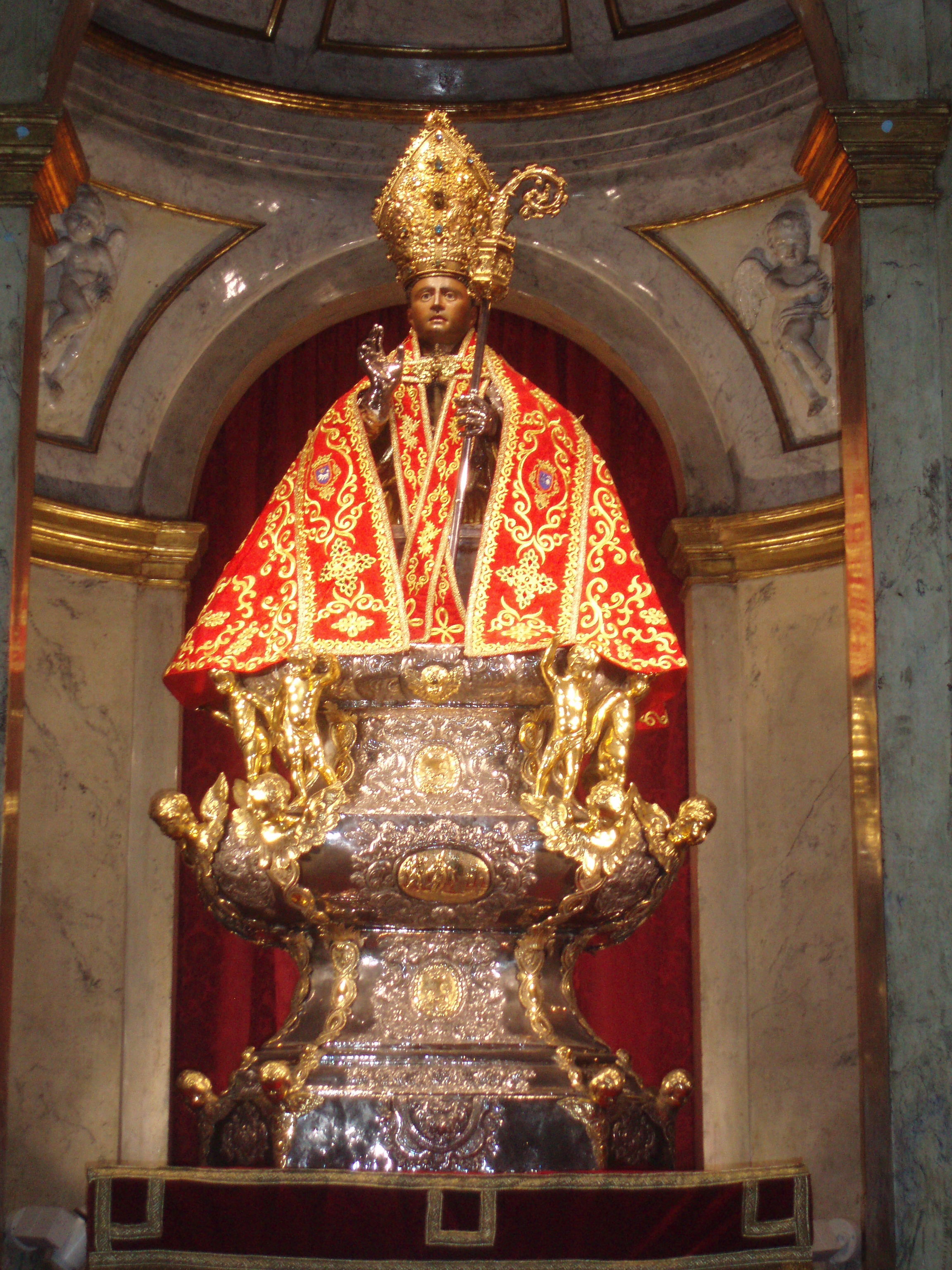
Today, the largest religious festival of the Basque Country is the Festival of San Fermin in Pamplona, which runs from July 6 through the 14th and features the famous running of the bulls. It celebrates one of Pamplona’s two patron saints. Ferminus, who was reportedly the son of a Roman of Senatorial rank named Firmus, who lived sometime in the third century. Firmus was convinced of the truth of Christianity, and traveled to Toulouse to be baptized by Saint Saturninus. He convinced Saturninus to return with him to Pamplona, where he preached and converted 40,000 people in three days. His son Firminus was raised a Christian and consecrated in Toulouse as well, before heading to northern Gaul as a missionary, where he was martyred. The problem is that the story does not appear before the ninth century, and doesn’t match up with any of the historical persecutions of the time. The story is a fabrication by the archbishops of Toulouse in an effort to essentially create subsidiaries, patron saints who were in some way descended or connected to their own patron, increasing that saint’s prestige and by extension the prestige of the saint’s cathedral. A similar thing occurred with Saint Eugenius of Toledo, who was said to be a disciple of St. Denis, and who was in fact mythical. It wasn’t uncommon for these saints to be adopted by their supposed homelands, in the case of San Firmin, with considerable enthusiasm.
Lancastermerrin88, CC BY-SA 4.0 https://creativecommons.org/licenses/by-sa/4.0, via Wikimedia Commons
Genuine early martyrs and heroes are to be found, though, and can be found in the work of Prudentius, a Christian poet of the early fifth century, and one of the great literary figures of Late Classical Spain. Prudentius’ was born around 348, his birthplace has been claimed by Zaragoza, Calahorra, and Vitoria, with Calahorra as the current scholarly front runner.
His twelve part Peristephanon was composed to celebrate the consecration of Calahorra’s cathedral around the year 400, and celebrates a collection of Iberian and other martyrs. His is the only source for some of these saints, including Eulalia of Merida, who I’ve mentioned several times, and Saints Emeterius and Celidonius, the patrons of Calahorra. Unlike the story of Ferminus, the stories recounted by Prudentius match the patterns of persecution that swept the empire in the reigns of Decius and Diocletian around 250 and 303-306, respectively.
Today Calahorra is technically in the province of La Rioja and so outside the official Basque territories, but Strabo identified it as a town of the Vascones, and the last lines of Prudentius’ story of Emeterius and Celidonius tells us that it was still the case in 400:
“Believe ye now, ye Vascones, once dull pagans,
how holy was the blood which cruel superstition sacrificed.
This blessing the Saviour himself bestowed for our advantage
When He consecrated the martyrs bodies in our town,
Where they now protect the folk who dwell by Ebro’s waters.”
All of this reinforces the picture of the Basque region as a peacefully integrated part of the christian Roman empire. It’s a bit of a backwater, but the cities like Calahorra and Pamplona are capable of producing sophisticates like Prudentius. The pagans in the mountains were probably viewed with some suspicion, there’s no hint of systemic violence or threat from them.

Zarateman, CC0, via Wikimedia Commons
The Split
It’s jarring then, to read accounts of the sixth and seventh centuries. Suddenly, Pamplona’s walls and relics offer protection from a twofold threat: heretics and the Vascones. For two centuries, every mention of the Basque tribes is in the context of military actions against them, by both Frankish and Visigothic rulers. It seems like a radical change, coming about quickly. For an explanation, we need to review the state of things in Hispania as the Western Empire entered its final century. The Rhine frontier broke in 406, Vandals, Suevi, and Alans pouring into and across Gaul. At about the same time the rebel Constantine III crossed over from Britannia and made himself ruler of Gaul, pushing also into Hispania. He replaced the garrisons in the Pyrenees with his own barbarian mercenaries, and in 409 these allowed the Germanic armies to cross over into Hispania. Whether it was malice or incompetence, we cannot tell, but Hispania quickly passed out of reach of imperial control. Counter attacks by the Visigoths were partially successful, but they were withdrawn and settled in Aquitaine, and the Suevi and Vandals were masters of the peninsula. Only the Ebro Valley and Eastern coast cities remained in imperial hands. If Calahorra and Pamplona still paid taxes and loyalty to roam, it was suddenly from the fringes, at the furthest end of a line of communication that now could only pass down the Ebro. A frontier had appeared, almost overnight.
Thanks to the efforts of Majorian, Rome’s grip on Tarraconensis and the coast, and probably the Basque country was strengthened, but the Visigoth kingdom of Toulouse remained in the north.
I’ve talked quite a bit about the settlement of the Visigoths, and never really clearly answered the question, why were the Visigoths withdrawn from Hispania and settled in Aquitaine? The accepted answer has generally been to answer the threat of the bagaudae, the large scale bandit armies that were threatening the economic underpinnings of the local elites. The problem is that in Gaul, bagaudae activity was strongest in the Alps and in Brittany. Placing an army in Aquitaine to combat these threats would be geographically nonsensical. There were bagaudae activities in Tarraconensis too, but no clear suggestion that these were the led or mainly conducted by Basques on a large scale, though there may have been Basques among them, and there is no indication of Basque raids north of the mountains into Aquitaine, so it’s unlikely that the Visigothic settlement was meant to deter them. In fact the Basques appear more often as the victims of violence than its instigators. The Suevic king Reccharius raided and devastated the lands of the Vascones on his way back from marrying a Visigothic princess, which is quite a non-standard approach to honeymooning.
Such disruptions were severe. The army had been withdrawn from the region in 411, which impacted the local economy, as a huge driver of demand was removed. The area of land under cultivation contracted, and shepherds now had fewer outlets for their wool, milk, and cheese. Pamplona and Calahorra remained, but Iruña was abandoned sometime before 450, as were several of the villas that have been excavated. Sudden, enforced poverty, with no clear hope of improvement, will tend to lead to desperate measures. The Vascones may never have risen to the levels of bagaudae armies, but raiding and violence almost certainly became necessary tools of survival in the mountains.
As the economic relationship changed, so did the cultural and political. In the first century, Strabo had noted Calahorra as a city of the Vascones. Prudentius, at the turn of the fifth century did the same, but it was the last time anyone would do so. In the Visigothic period every reference to the Vascones is to a dangerous rural population, who threatened the settled towns of the valleys. Though they may have shared an ancestry, the populations of the valleys no longer saw themselves as related to the populations of the mountains.
Language may have played a role, as Latin would have been much more common in the cities as the lingua franca of trade and the educated classes, with much less influence in the hills. We can’t be certain about it, but if fewer and fewer people in town spoke Euskara, and fewer and fewer people in the hills spoke Latin, the language barrier could only enhance the sense of difference.
Language may also have had a unifying influence among the people of the hills. In this period we also see the final disappearance of different tribal names. No more references to Vardulli, or Allotriges, they are all Vascones. Whether they accepted such an externally imposed identity we can’t know, but they probably saw themselves as different from the lowlanders, and that may have become a more important distinction than that between the various mountain tribes, who at least shared a common language. A similar process occurred in other frontier areas of the old empire. In Scotland, for instance, an extensive list of tribes that lived north of the wall was reduced to just two after the Roman collapse.
The creation of a Basque identity then can be seen not so much as a withdrawal, but as a split. Two economic and social systems, the urban and the rural, had existed side by side for centuries, each happy to identify with the other as brothers. But the disruptions of the barbarian invasions and removal of the imperial drivers of trade led to an economic collapse that led one half to desperation and the other half to label their former brothers as brigands. It’s kind of a tragedy, really.
In 456 Theodoric II invaded Hispania and toppled the Suevic kingdom of Rechiar. His brother Euric invaded again in 472, capturing Tarraconensis and putting an end to Roman influence once and for all. Vasconia became, at least nominally, the subject of the Visigothic kingdom. After 469 there are no contemporary sources for Hispania at all until the emergence of our friends John of Biclaro and Isidore, so the Basques vanish for a while from history.
By the time they appear again, their position has changed significantly. The success of the Franks and retreat of the Visigoths meant the Basques now occupied a border land between two great rival powers. Such a position can be tenuous but also offers opportunities.
Neighbors but Few Friends
In 581 a Frankish duke led an army into Vasconia, only to have most of it destroyed. The mission was apparently punitive, vainly seeking redress for earlier raiding. In 587 the Basques raided Aquitaine. They destroyed crops, uprooted vines, and took back with them produce, livestock, and captives. Why captives? Most of those captured were probably not high on the social scale, and so worth little in terms of ransom, but they could be taken south and sold as slaves in the Visigoth kingdom. The Basques were perfectly placed as a conduit for such a trade, in both directions.
Visigothic kings periodically campaigned against the Basques, usually pricked by raiding. John of Biclaro reports that Liuvigild succeeded in bringing a large part of Vasconia under his control and founding a city there, though the location of said city is up for debate. A later successor, Suinthila, who we haven’t talked about yet, also campaigned against the Vascones with some success. He founded a city, now called Olite or Erriberri in Euskara, to serve as a hub for the Vascones he now called his subjects. What’s interesting about that is that Olite is pretty far south of the core highlands, south of Pamplona. It’s unlikely that Suinthila had the resources to force a large-scale relocation, so the Vascones he had “defeated” may have actually occupied the surrounding countryside, Suinthila had been unable to drive them out militarily, and the town was founded as a necessary center of trade and control. It would appear then, that the Basques were actually spreading back southward from their mountain strongholds during the period.
Similar processes were at work in the north as well, as Frankish dukes mounted ever larger campaigns against the Basques that threatened Aquitaine. Such a ratcheting up of military response suggests that previous efforts had been ineffective.
The seventh century is the darkest of dark ages generally, and even more so for the Pyrenees. In general terms I can say that Basque influence of some kind seems to have spread north of the mountains, most concentrated to the south the River L’Ardour, going by place-name evidence. In this spreading influence are the origins of the region of Gascony, culturally distinct from the rest of Aquitaine. The nature of that influence, whether it involved population movement or cultural diffusion, is hidden from us.
On the Spanish side, the picture is no clearer. It’s possible the region came under direct Frankish rule for a time, but the sources for that are so garbled as to be nearly useless. There is a story of a Christian bishop who crossed the mountains in the 630s and attempted to convert the inhabitants, but met only failure and hostility. He did manage to complete the crossing and enjoy the hospitality of the local bishop, probably in Pamplona. Paganism was still strong in the 630s, probably was still strong in 711, when the Visigothic kingdom fell to Muslim invaders from Africa. That invasion adds a whole new layer of problems for the Basque historian. I’m not going to dig into that now, but may come back to it once we get there, whenever we get there.
Well there we go. I told you it would kind of run into the sand at the end. Sorry about the long episode, the longest I’ve done in some time, but I wanted to get it all done in one.
 The Dark Ages Podcast