542 – 543
Hello, and welcome to the Dark Ages Podcast. This is Episode 67: Totila, and the Ostrogothic Resurgence.
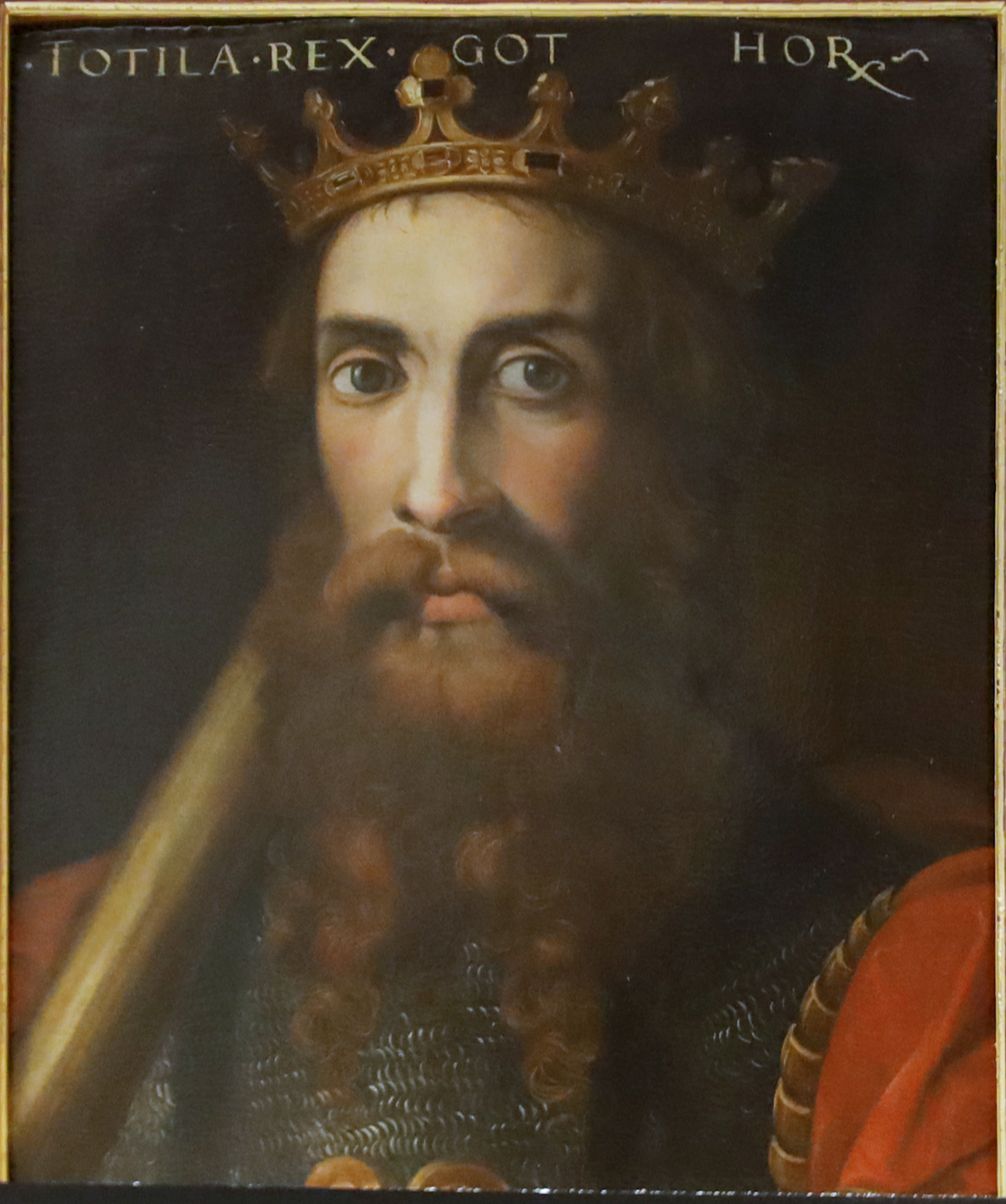
Last time we were all together I announced, in portentious tones, the arrival of the Goth’s newest leader, a warrior king known to history as Totila. His real name was Baduila, and judging by his coins, that was how he referred to himself. It’s not certain exactly what Totila means or how he acquired it. It seems to have been used by his Gothic contemporaries, apparently as some kind of nomme-de-guerre. Until those coins were discovered, Totila was the only name that anyone knew, since it was all that made it back to Procopius and the other Greek sources. So I will be referring to him as Totila from here on, to avoid confusion, but now you’ve heard the other name.
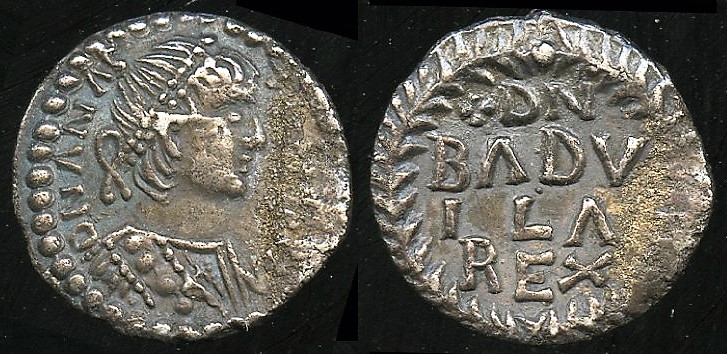
FabioRomanoni, CC BY-SA 4.0 https://creativecommons.org/licenses/by-sa/4.0, via Wikimedia Commons
Totila came to power after a period of …let’s call it reorganization among the Gothic leadership, though he was in a reasonably strong position in spite of that, thanks to the successes of Ildibad and the ham-fistedness of the Byzantine generals that Belisarius had left behind. The imperial army was making itself unpopular, and Totila had the advantage in the competition for recruits.
Word of this new development had reached Constantinople, and Justinian, probably growing frustrated at his general’s continuing failure to bring this war – which had for all intents and purposes already been won – to a close, ordered that all imperial forces in Italy rally together to deal with this new threat before it became terminal. That this order had to come directly from the emperor shows just how dissipated the Roman efforts had become in the short time since Belisarius’ departure. No one mentioned, of course, that Justinian’s policy of siphoning away money and manpower for the Persian front was at least partly to blame for the situation. Those are not the kinds of truths that one presents to emperors.
The emperor’s order did jar the generals enough for them to take some action. They all rendezvoused near Ravenna, putting together a force of 12,000 men. This seems somewhat teensy. The number of independent commanders had ballooned now to 11, which means an average of just over a thousand men per army. For once I’ve not seen any modern historians scoff at the number. There were more Imperial troops in Italy than that, but garrison duty claimed a significant portion of them. No matter, the army Totila had to oppose them was only about 5,000, so surely there was nothing to worry about. Nominal command fell to Constantianus, who I’ve had cause to mention off and on.
The decision was made to advance directly on Verona, functionally the Ostrogoth’s capital. Head of the snake, etc. Things started out well, arrangements were made with a sympathetic local, helped along with a well-placed bribe. The most energetic commander on the Byzantine side, one Artabazes the Armenian, led a hand-picked advance force of about 100 men to capture one of the city’s gates, left helpfully unlocked by that sympathetic local. A handful of Gothic guards were killed in the process, and the enemy’s appearance was so sudden, the garrison panicked and fled the city. They retreated to a wooded and easily defended hill nearby, took cover, and watched events unfold.
The generals, understandably excited at achieving a victory before the main army even arrived, began to muse about the spoils that could be had from the capture of such an important city. Then they began to negotiate about how such spoils might be divided. Then they began to bicker about spoils, and the bickering turned into a full on argument about spoils. Constantianus had neither the prestige nor the force of personality to impose any kind of compromise on the other commanders, or put the argument to bed. Progress toward Verona ground to a halt, about four and a half miles from the city.
The embarrassed gothic garrison, watching through the night, realized two things. Number one: that the imperial troops had stopped, and were not going to move immediately to support their advance party. Number two, the imperial advance party apparently did not realize that yet, since they had, incredibly, left the gates open.
Before dawn, the gothic garrison swooped back inside, shut the gates behind them, and attacked the imperials, driving them to the walls and gatehouse.
By morning the main imperial force had arrived before the gate. Finding it closed, the generals, so eager for spoils the night before, declined the engagement. If Constantianus had wanted to press the attack – and there is no evidence one way or the other – he was again unable to make the command stick. The men trapped in the gatehouse pleaded with their compatriots not to abandon them, but the army turned around and left. With no other escape open to them, and fearing retribution from the Goths, the advance men, including Artebazes, jumped from the battlements and windows of the gatehouse. The fall killed several and injured many more. That they did not even attempt to surrender suggests the bitterness that had grown up between the two sides over the last few years. The army moved down the right bank of the Po, heading back toward Ravenna, Artabazes heaping abuse on his colleagues for their ineptitude all the way.
Totila received word of the Imperial army’s retreat from Verona, and set out in pursuit. He was outnumbered by more than two to one, but was encouraged by his enemy’s generally flaccid performance so far. That didn’t mean he was going to go rushing into a fight though. He kept his distance and shadowed the retreating Byzantines on the opposite bank of the river.
Totila’s chance came when his quarry paused and camped on the banks of the Lamone river, a tributary of the Po near Faenza. He detached a special task force to circle wide, cross the river a few miles down stream, and approach the Byzantine camp from the rear, while he readied his main force to cross the Po and confront them directly. It was a bold move, attempting a river crossing in the face of the enemy. Totila was clearly leaning heavily on the absence of a firm hand in his enemy’s camp, and he was right to do so. Artabazes made the absolutely correct suggestion that they should ready themselves for battle immediately, allow only half the goths to cross the river, and then attack. The two halves could then be fought separately and defeated easily. Each of the eleven commanders had their own ideas about how to proceed though, and as they squabbled, the opportunity was lost. Totila and most of his army crossed unchallenged.
Things were still dicey for the Goths as they formed up after the crossing. Totila harangued his army, and while we have to assume that Procopius, like all his historical forebears, invented the speech out of whole cloth, but why on earth should that stop me from quoting parts of it?
“Let each one of you… be eager to join battle with the enemy with all your strength, understanding clearly that if we do not succeed in the present battle, it will be impossible to renew the struggle against our opponents. [We may] grapple with the enemy in high hopes, taking courage from the unjust acts committed by them. For such has been their conduct toward their subjects that the Italians … need no further punishment for the flagrant treason which they dared to commit against the Goths.”
In an effort to buy time, a challenge to single combat was issued. These would continue to be part of the military tradition into the high middle ages and beyond, but by then they were almost always declined. In this case though, the challenge was actually accepted. Artabazes the Armenian proved he was both brave and capable, and rode out to meet the Gothic champion, a fighter named Valaris “tall of stature and of terrifying mien”. The fight seems to have been a straight joust, with Artabazes killing his opponent with a single spear stroke, but running up on the dead man’s spear and being severely wounded in the process. He was carried from the field and died three days later.
The whole episode, to be honest, fits so neatly into both the Classical and Germanic traditions of heroic verse that I struggle to give it much credence, but I lay it before you for your judgement. Either way, Artabazes was killed, and the Byzantines had one less competent commander. Or, to use the more dramatic wording of Procopius, who was clearly an Artebazes fan: “this mishap shattered all the hopes of the Romans.”
Still, the imperial army outnumbered the Goths by nearly two to one, and were able finally to get into enough of a formation for battle to be joined. Fighting was hard, but when the 300 man advance force Totila had sent down stream appeared in the Byzantine rear, the army panicked, thinking it was the vanguard of a second full-sized army. Morale, already shaky, broke, and the imperial army fled. Slaughter followed, as it always did when one side routed. The Ostrogoths captured several standards, making the battle of Faventia (as Faenza was known at the time) an even greater victory in psychological and moral terms than it was in material ones. The imperial commanders did not rally together to find renewed unity or purpose in defeat, and the army broke into chunks and retreated in different directions.
Totila did what several of his predecessors had failed to do at key moments: he pressed his advantage. He had the opportunity to break out of the Po Valley, and he took it, sending part of his army to lay siege to Florence. The city of lilies was commanded by a general named Justin, who earlier in the war had sat on his hands and failed to march in defense of Milan, leading to the sack and destruction of the city. He had not been expecting an attack, and Florence was poorly prepared. Justin sent desperate messages to his fellow commanders, and his calls for aid were answered by three: John, Bessas, and Cyprian. (You don’t need to know these names, by the way.)
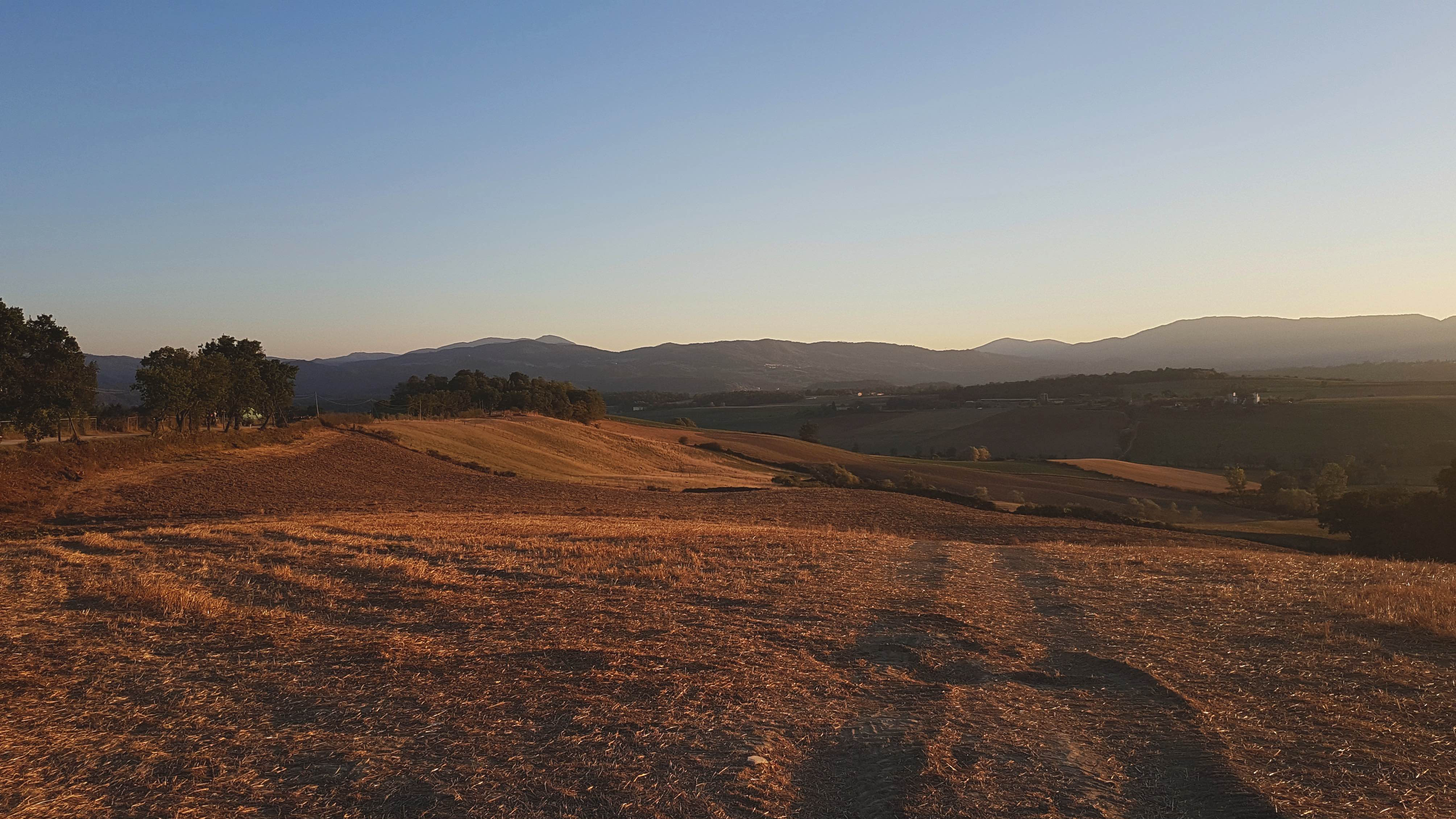
Totila’s move was successful, in that the Goths raised the siege of Florence and moved north, into a region of northern Tuscany now called Mugello, then called Mucellium. Mugello, just as an aside, is the quintessential Tuscan landscape; rolling hills, cypress trees, fields of sunflowers. You expect Diane Lane or Julia Roberts to appear on a bicycle any minute.
John, Bessas, and Cyprian had no time to daydream about Julia Roberts or to admire the views as they worked out how to deal with the Goths. They decided to send a force of picked men to catch the enemy by surprise, with the regular troops coming up from the rear to act as an anvil to the advance men’s hammer. It had worked at Verona, after all, it was just the follow-through hadn’t been there. The three of them drew lots to decide who would command this task force, and John’s name came up as the winner. Now all of a sudden, the other two could not spare their best men for the mission, which doesn’t speak well for John’s reputation, and the advance force in the end consisted mainly of men from his own army.
Meanwhile, the Goths’ scouts had alerted them that the Byzantines were in pursuit, and they found themselves on a hill on which they could take up a defensive position. So much for the element of surprise. John’s force approached the Goths’ hill, but were met with an enemy buoyed by their recent successes, who rushed down the hill at them. John’s men held for a while, but as the main Byzantine forces came near, the advance men’s will broke, and they fled back toward the main army. The sight of the retreating imperial army, with the Goths’ baying for blood behind, panicked the main force, and once again the Byzantines were driven from the field. Bessas was wounded, and many imperial troops and officers were taken prisoner. The three commanders escaped.
Totila made a point of treating his prisoners well, and plenty of soldiers switched sides. There was little point in fighting for an unpopular regime that, on top of everything else, kept losing.
Florence remained in Imperial hands, but the battle of Mucellium broke what little cohesion was left among the Byzantine commanders completely. Commanders retreated to various cities across central Italy. Cyprian fortified Perugia, John went back to Rome. Justin held Florence, and Bessas made his way to Spoleto. Any pretence of coordination was gone, and none were prepared to face Totila on their own. The Tuscan excursion had had a positive logistical effect as well; since the region hadn’t seen much fighting, especially compared to the devastation that had been visited on Aemilia and the other northern districts, Totila’s army found supplies easy to acquire and stockpile for future fights. Totila was unquestionably in the driver’s seat, and it was there that he would stay.
Having demonstrated tactical abilities, and a flare for leadership, Totila demonstrated his strategic talents. Central Italy was too well defended; taking the various fortified cities by siege would bog his army down and make them vulnerable to counter attack. So Totila conceded control of most of Tuscany, Lazio, and Umbria to the Byzantines with a couple of exceptions. He captured Cesena, but more importantly, he took control of and fortified the Furlo pass, where the Via Flaminia ran through a narrow, easily closed gorge, choking off one of the primary connections between Rome, Ravenna, and the Adriatic.
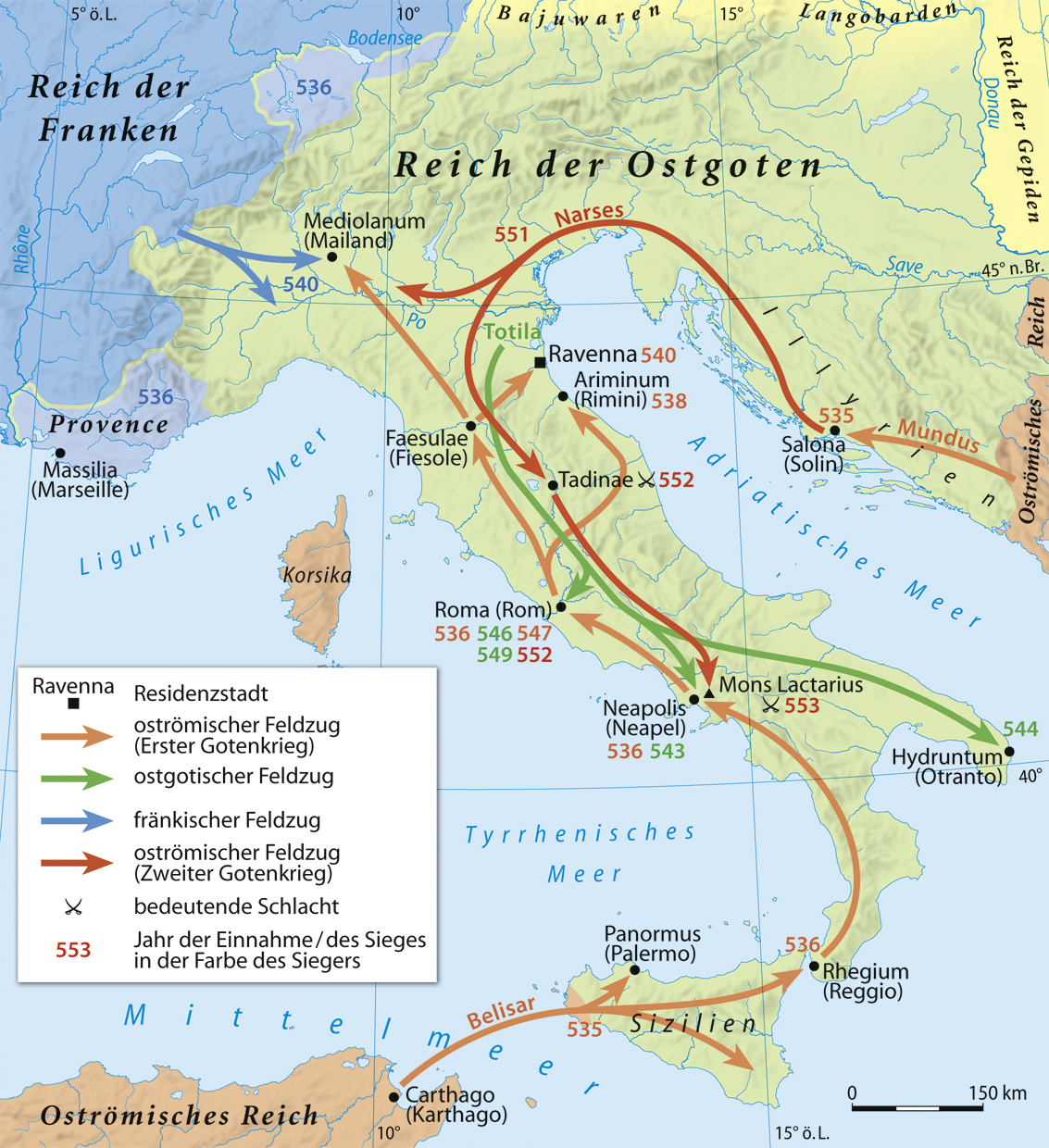
Envelopment became Totila’s strategy. It was still early in the year (the battle of Mucellum had probably been fought in April or May of 542), and he had time to arrange the strategic situation in his favor. He moved rapidly down the eastern coast of Italy, taking control of the countryside and leaving Byzantine strongholds, especially coastal ones, alone. Those garrisons were effectively cut off, since none of the imperial commanders would risk open battle. When fortified towns were captured, Totila ordered their walls razed, to limit their usefulness to the enemy and limit the chances of local revolts. Most notable were the walls of Benevento, an important strongpoint that sits on the routes between Naples and the Adriatic, and which fell sometime in early summer.
Along the way, Totila was very aware of the grievances and frustrations that had made the Gothic resurgence possible, as he had already made clear at the outset of Faventia. He went out of his way to be conciliatory toward conquered populations, recruited civilian administrators to his side, and even some military officers. We have no direct information about how Totila maintained control over the territory he captured, but it stands to reason that the civilian bureaucracy largely remained in place. Procopius makes a point of mentioning the large sums of money that the Goths were able to gather in the course of the campaign. He was undoubtedly taking advantage of the large tax-raising apparatus that still remained in Italy and had been rejuvenated somewhat by the Byzantine presence. The Italo-Romans, it seems, were becoming accustomed to changing bosses every few years. The important point is that Totila did not pillage the captured territories; he did not treat them as a conqueror, but as a rightful ruler, collecting taxes and the rent from confiscated estates to pay his army. This had the added advantage of depriving the Imperial armies of that revenue.
Like Theodoric had, Totila maintained his identity as a Goth. He and his warriors would live alongside the Italian majority, but it was clear that Totila’s intention was to maintain the Goths’ status as a ruling military elite. That basic fact probably kept at least some of the Italians from going over to Totila’s side, despite their dissatisfaction with the Byzantine regime.
The prize in the south was unquestionably Naples, the most important port and commercial center, easily accessible to and closely tied to Rome. By November 542, Totila’s army had blockaded the land routes into and out of the city. Winter, meanwhile, discouraged travel by sea. Totila was confident enough in his blockade to break off a force to go and capture Cumae, on the Adriatic coast.
The Neapolitan garrison, about a thousand men, was commanded by a general called Conon. Conon the emphatically not a barbarian. He had been in Italy at least since the siege of Rome in 537, leading an army of Isaurians to assist in capturing the port of Ostia. Since then he had shown himself to be reasonably competent, if perhaps a little reckless; he had nearly lost Ancona in 538 when he chose to meet the Goths in open battle rather than force a siege. The battle had gone poorly, the city gates were closed before Conon’s retreating men could get inside, though the citizens lowered ropes to help the survivors climb the walls to safety. The Gothic army was right behind with scaling ladders, and for a moment the battle seemed lost, until other commanders, with wiser heads, managed to drive off the attack. What happened to Conon after that is unclear, but he was the man on the spot when the Goths arrived outside Naples.
Looking over the city’s store houses, Conon understood that he would need help. Naples, like other Italian cities, was a shadow of its former self, but the population was still large and difficult to keep fed if cut off. The supply situation was not desperate, but they couldn’t hold out forever. Conon sent messages to his nearby colleagues looking for aid. Meanwhile, the civilian governor of Naples was making his feelings about the whole thing known with a string of insulting messages aimed at Totila, who noted each one with displeasure.
Now, you may be wondering at this point whether Constantinople was aware of how badly downhill things had slid since Belisarius’ departure. The answer is of course, Justinian was very well informed. But he had staffing problems. He had appointed a new prefect for Italy, Maximinus by name, to take matters in hand as the new prefect of Italy. A civilian official, Maximinus was nonetheless empowered to direct the commanders already in Italy. The emperor raised an army of reinforcements, mainly of Armenians and Thracians, and sent them with Maximinus by sea.
Maximinus, alas, did not have the temperament for the job Justinian had set him. He was intimidated by the military commanders under him, he dithered, he deferred, he was timid and indecisive, and so when the fleet arrived in Epirus, it stayed there. He was unable to decide on a strategy to achieve the objectives his emperor had laid out, and didn’t want to arrive in country without one. Equally, the idea of trying to cross the Adriatic in winter did not appeal. He had apparently reached Epirus about the same time Totila was investing Naples. So reinforcements and new leadership just sat there, waiting for the weather to clear and for the boss to make up his mind.
Justinian, probably puffing angrily at this point, appointed another commander, Demetrius, who had served with Belisarius. “Demitrius! F***in’ fix it.”
Demetrius made it to Sicily, where he learned that Naples was reaching the end of its supplies and needed help urgently. He gathered as many ships as he could get his hands on and heavily loaded them with grain and supplies. He was hoping to make the Goths believe that the ships contained a huge army, and so bluff his way past their blockade. In this he was successful, but was not confident enough in his strength to make straight for Naples, and sailed to Rome instead, in hopes of finding more men. The Imperial garrison was uninterested in joining, and Demetrius was forced to make do with the small army that had come with him from Constantinople. He was accompanied by the Governor of Naples, who had slipped past the enemy blockade to urge Demetrius to action. The fleet sailed again, but by now Totila was wise to them. He kept a small but fast fleet ready, and when the Byzantine ships passed by, they shot out and engaged them. The fight was quick and extremely one sided. All the ships were captured, along with the Governor. Totila looked at the list of insults he had endured from this man, thought hard, and decided not to kill him. Instead he had his hands cut off and his tongue cut out, and set the governor loose. I don’t know what happened to him after that, but it probably wasn’t a bed of roses. General Demetrius managed to escape and made his way back to Sicily.
There he met Maximinus, who had finally managed to shake that Epirus mud from his boots and made it to Syracuse. This burst of activity was only temporary, though, and his terror of battle, or of making the wrong decision, was once again his driving force. Everyone around him pushed for action, including messages from Conon, who had reached the end of his supplies, and was staring a dire situation square in the face.
Messages from the emperor himself finally broke through Maximinus’ reluctance, as fear of Justinian overrode fear of the sea and battle. The whole army was dispatched to sail straight to Naples. Maximinus himself, though, stayed right where he was. He was a rock.
It was late in the year, not yet winter, but not a great time for naval expeditions. Sure enough, the weather took the Goths’ side. A gale blew up around the Roman ships, and drove them ashore, not at Naples, but just a little way down the coast from the besiegers’ encampment. The Goths were able to board the stranded ships easily, killing and capturing soldiers with little to no resistance, and sinking the ships in the shallow water at will.
Demetrius’ luck had run out, and he was captured among the wreckage. In view of the governor’s fate, this was a nervous moment for him, but mutilation was not on the cards for the unlucky general. It would be humiliation instead. Totila ordered that Demetrius be bound, a halter around his neck, and marched up to the gates of Naples, where he announced to Conon, and to the Neapolitans, the Goths’ demands for their surrender. Totila praised the Neapolitans for the support they had given his predecessors. In recognition of old relationships, he was prepared to be generous. “Do not … in vexation at the miseries arising from the siege, think that you ought to regard the Goths with anger.” If the city was surrendered, he said, Conon and his garrison would be free to leave, with full honors, and Naples would not be subject to sack. After months of resistance, Totila would have been well within his rights to exact the maximum penalty for defiance, but that wasn’t his style.
Conon felt that loyalty to the emperor and his own personal honor demanded that he create one more opportunity for the imperial war machine to come to his aid, and asked for one month’s grace before he would accept the offer. Totila gave him three. He was being reasonable, and also making a point. He needed it to be clear that no one else was coming to help the Imperial armies, no matter how much time they were given. The terms were agreed, but the city leaders, pressed by the needs of their citizens, opened the gates to the Goths before the deadline, in February or March of 543. Naples belonged to Totila.
He brought supplies into the city, but rationed them, to avoid what we would now call refeeding syndrome. Only once he was satisfied that the population was healthy again did he allow free passage, and citizens and soldiers were allowed to go where they pleased. He even provided Conon and his men with pack animals and an escort back to Rome, after the wind proved uncooperative in their efforts to sail there.
Procopius makes a point of contrasting the leadership styles of Totila and the Byzantine generals. The generals and their armies continued as they had before, exploiting the Italian locals and just being generally bad news. Totila, meanwhile, dispensed even handed justice for its own sake, punishing those who violated civilians lives or property whether they were Italian or Goth. Our historian was certainly making a rhetorical point, and may have been exaggerating the behavior of both sides, but outcomes made it clear that there was a significant difference in approach.
Constantianus recognized that he was losing what little control he had over the situation, and took what was probably his bravest decision in the whole war. He wrote to Justinian. He admitted that he had lost. He didn’t have the men he would need to reverse Totila’s gains, and more importantly, he had lost the support of the populace, both moral and financial. Constantianus prevailed upon a number of his co-commanders to co-sign the message and sent it off to the boss to nervously await a response.
Totila, meanwhile, was writing a letter of his own. He addressed the senate of Rome, which at this point we should understand as the assembled native nobility of the city and its hinterland, and made his case. “Has it really come to pass that you are ignorant of the good deeds of Theodoric and Amalasuintha, or have they been blotted from your minds with the lapse of time and of forgetfulness? … Was it because you had been informed by hearsay or learned by experience the righteousness of the Greeks to their subjects that you decided to abandon to them the cause of the Romans and the Italians? At any rate, you have … I think, entertained them royally, but you know full well what kind of guests and friends you have found them… Give some ground in the defense you must make against us, and give us some ground for forgiveness of you.”
Totila is walking a narrow line here, in fact. He’s appealing to the memory of Theodoric and Amalasuintha as rulers who had worked for the benefit of Italians. Both, to a degree, were Romanizers, and it was Amalasuintha’s Romanizing efforts that had led to her murder at the hands of a recalcitrant Gothic nobility. That element still existed within Totila’s army. While desperation had made them willing to accept any ruler that seemed to offer survival, and success had kept them loyal, it was still possible that they could turn against their new war leaders should he seem to be denigrating his Gothic identity in favor of the Italian. Other statements of Totila’s are aimed at this audience, that he intends for Goth to continue to rule over the Italian as a separate aristocracy – an aristocracy ideally guided by justice and principle, but a culturally distinct elite all the same.
This letter made its way into Rome, followed by a stream of others in the same vein that were posted around the city. Alexander, the city’s garrison commander, clamped down on outward communication, and so Totila received no reply. So, I imagine with a heavy sigh, he mustered his army out of Naples, tearing down its walls before he left, as had been his policy, and headed up the road toward Rome.
Constantianus’ letter had reached its intended audience as well, and provoked a response. Justinian was not the kind of man who accepted defeat gracefully, or at all. Like the Romans of earlier centuries, to him, defeat only meant that the war was not over yet. Everyone he had sent to Italy had proved unequal to the task; only one man had found the kind of success that could not be undone. The war with Persia was still very hot, but to abandon the Italian project would be personally embarrassing to Justinain, and that simply would not do. So in early spring, 544, Belisarius was called upon to pass his eastern command over to another, and to sail westward. The empire’s greatest general would return to Italy, to clean up the mess that lesser men had made of his achievement.
We will, of course, be talking about the return of Belisarius to Italy in our next episode. Instagram, website, etc. Or to be more specific and helpful, @darkagespod on instagram, darkagespod.com for contact page and email. Thank you as always to my very generous and very patient supporters on ko-fi.com, there will be individual shout-outs on the way next time. Until then, curate vos. Take care.


Leave a comment